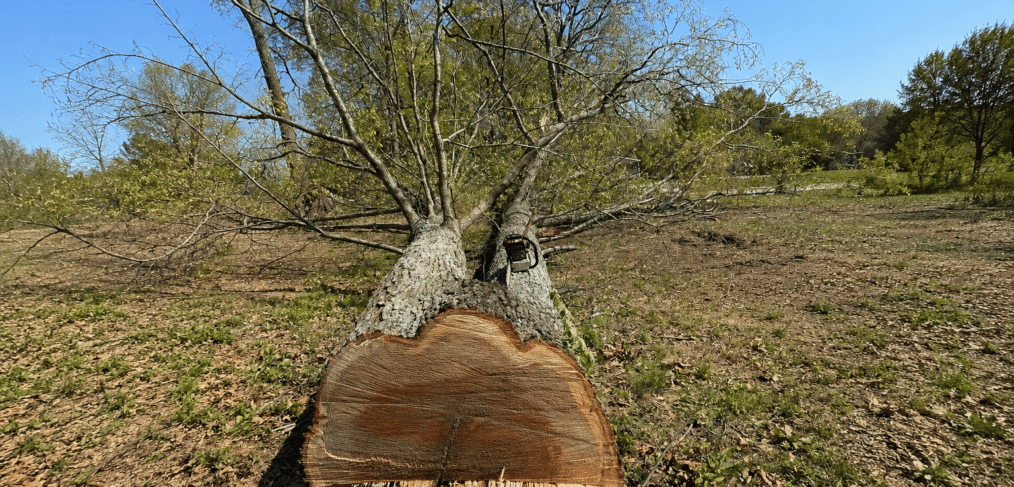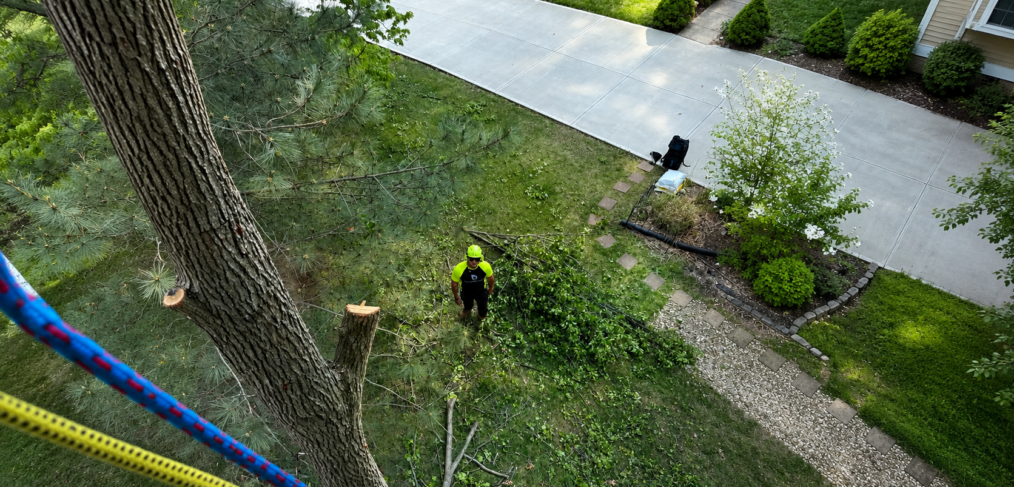
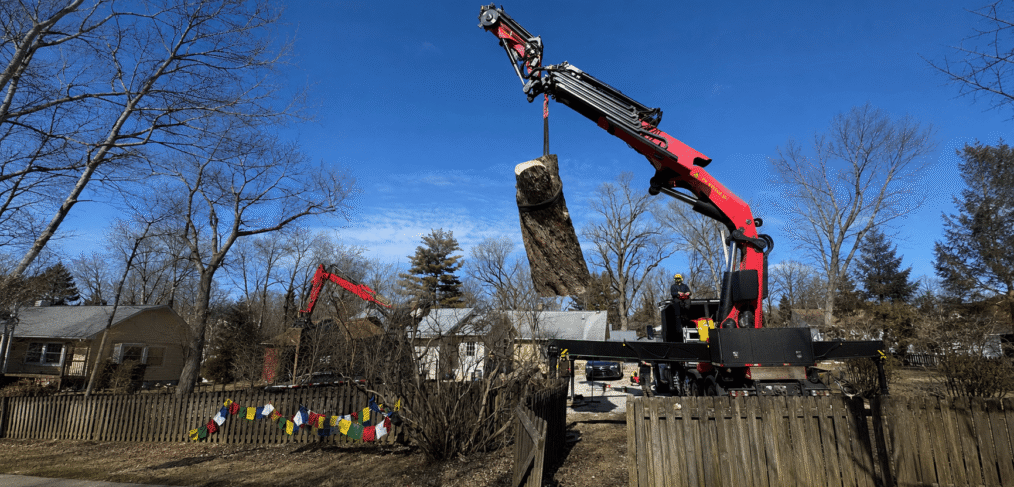
Hazardous tree with a split trunk over a home in Bloomington, Indiana, before removal

When Is It Appropriate to Cut Down a Tree? A Guide for Bloomington Homeowners

Deciding whether a tree stays or goes is one of the harder calls a homeowner makes, partly because both mistakes are expensive. Wait too long on a hazardous tree and a summer storm makes the decision for you, usually at three in the morning and usually onto something you own. Move too fast and you lose forty years of shade you could have kept. Hazardous tree removal Bloomington property owners are weighing right now almost always comes down to one question: is this tree actually dangerous, or does it just look rough?

There are established criteria for answering that. Here they are, along with the situations where removal is usually the wrong answer.

Why This Decision Feels Riskier Than It Should

Three things make an objective assessment hard.

Trees decline slowly and invisibly. Internal decay, girdling roots, and pest damage can progress for years with little visible evidence. Frequently the first obvious symptom is a limb on the driveway. By the time the canopy thins dramatically, the structural problem underneath it is usually well advanced.

Attachment clouds judgment. Homeowners who have watched a tree grow for thirty years are not neutral observers, and they know it — which is why so many people stay stuck rather than decide.

The work is disruptive. Taking down a large tree near a house is a real project, and the empty space afterward can feel jarring without a replacement plan.

None of that changes what the tree is doing. It just makes it harder to see clearly, which is the argument for getting a second set of eyes on it.

Hazardous Tree Removal Bloomington Homeowners Shouldn’t Put Off

Arborists assess trees against a consistent framework: the likelihood of failure, the likely size of what fails, and the target — what gets hit if it does. A dead tree in the back of a wooded lot and a dead tree over a driveway are the same tree with very different risk ratings. These five situations are where removal is typically the responsible call on a Bloomington-area property.

1. The Tree Presents a Clear Safety Hazard

Removal is warranted when failure is reasonably likely and something valuable is underneath. Warning signs:

  • A lean that has visibly worsened, particularly with soil heaving or cracking on the uphill side of the root plate
  • Large dead or hanging limbs over roofs, driveways, decks, or play areas
  • Major cracks, seams, or open cavities in the trunk or primary limbs
  • Root damage or visible root decay, especially where construction, trenching, or grade changes happened in the last several years
  • Mushrooms or hard shelf fungi at the base of the trunk

One defect on its own is not a verdict. Several together, near a target, usually is.

2. Advanced Disease or Pest Damage

Some conditions progress past the point where treatment is realistic. In Monroe County this most often means:

  • Emerald ash borer infestation that has already taken a substantial share of the canopy
  • Fungal fruiting bodies indicating internal wood or root decay
  • Vascular disease or root rot that has compromised structural strength

Important distinction: pest or disease activity alone does not mean a tree has to come down. Early-stage problems frequently respond to plant health care and corrective pruning. It is the combination of advanced decline and compromised structure that makes removal necessary. Our companion guide on diseased tree removal covers that judgment call in more depth.

3. Severe or Irreparable Storm Damage

High-wind events regularly leave trees that pruning cannot fix — major trunk failure, loss of several structural limbs, severe splitting through a union, or a lifted root plate. Other trees look catastrophic and recover fully. The difference is not obvious from the ground, which is why a post-storm assessment is worth the call before anyone decides anything. If a damaged tree is currently threatening a structure, that is emergency tree service territory, not a scheduled appointment.

4. Structural Defects That Can’t Be Reliably Managed

Some trees carry built-in weaknesses: co-dominant stems with included bark, oversized limbs on poor attachments, or a documented history of repeated failures. Cabling, bracing, and reduction pruning can manage many of these. When the defect sits directly over a house and cannot be adequately mitigated, removal is usually the more honest long-term answer than an annual inspection and hoping.

5. The Tree Is in the Wrong Place

Occasionally the tree is healthy and the location is the problem — mature size in permanent conflict with a foundation, utility line, sidewalk, or septic field. Where root pruning and canopy reduction can’t resolve the conflict without wrecking the tree, removal and replanting somewhere better is the durable fix. Repeatedly cutting a tree back to fit a space it was never going to fit is not tree care.

When Removal Is Usually the Wrong Answer

Just as useful as knowing when to remove is knowing when not to. Preserve the tree when you’re looking at:

  • A healthy tree with only minor deadwood — that’s a tree trimming job, not a removal
  • Structural problems in a young or mid-age tree that pruning can correct over a few cycles
  • A large, well-structured specimen with high landscape or ecological value and no significant defects
  • Cosmetic complaints — leaf litter, shade on the lawn, acorns
  • Treatable pest or disease activity caught early

Any company that recommends removal on every visit is telling you something about the company rather than about your trees.

The Two Species That Come Up Most Often Here

Ash. Emerald ash borer was confirmed in Indiana in 2004 and has now been detected in all 92 counties, per the Indiana DNR Division of Entomology and Plant Pathology. An untreated mature ash in Monroe County is on a timeline, and dead ash becomes brittle quickly — which makes it more dangerous and more expensive to remove the longer it stands.

Silver maple. Planted heavily across South Central Indiana subdivisions decades ago for its growth rate, silver maple is now aging into the phase where that growth rate becomes the problem: soft wood, included bark at major unions, and heavy limbs with marginal attachments. A great many of the trees we assess are not diseased at all. They are simply large, old, and structurally unsuited to standing over a roof.

Before You Cut: Make Sure the Tree Is Yours

This step gets skipped constantly. Inside Bloomington city limits, planting, maintenance, and removal of trees on city property, in the public right-of-way, and along city streets is handled by the City of Bloomington Parks and Recreation Department’s Urban Forestry Program — not by the adjacent property owner. The strip between the sidewalk and the street is frequently right-of-way even though homeowners mow it, and the tree standing in it is very often not theirs to remove.

Two things worth knowing before you schedule anything:

  • If the tree is near the street, confirm with the City’s Urban Forestry Program whether it sits in the right-of-way
  • The City also runs a Tree Assistance Program, through which eligible homeowners can apply for financial assistance with tree removal, pruning, and planting on land inside city limits

Properties in Ellettsville, Bedford, Martinsville, and unincorporated Monroe County fall under different rules — check with your local authority if the tree is anywhere near a public road.

What to Do Once You’ve Decided

  1. Get a site-specific evaluation in writing. A qualified arborist should document the tree’s condition, lay out the realistic options — pruning, treatment, cabling, or removal — and explain the reasoning, not just quote a number.
  2. Ask what happens if you wait. A straight answer to this separates a risk assessment from a sales pitch. Sometimes the honest answer is “not much, check it again next year.”
  3. Choose on process, not just price. Rigging plan, property protection, insurance, and cleanup are what determine whether removal day damages your lawn, fence, and irrigation.
  4. Decide what happens to the wood. Logs can be milled, kept as firewood, or processed into organic mulch that goes back into your beds instead of into a landfill.
  5. Plan the replacement before the removal. Grind the stump, amend the soil, and choose a species suited to the site. A gap with a plan feels completely different from a gap.

Frequently Asked Questions

Does a leaning tree always need to be removed?

No. Many trees lean naturally toward light and have grown reaction wood to compensate — those are usually stable. The concern is a lean that has changed, particularly with cracked or heaving soil on the opposite side of the trunk. A new lean after a storm should be assessed promptly.

Can a tree with a hollow trunk be saved?

Sometimes. Trees can remain structurally sound with substantial hollowing as long as enough intact wood remains around the perimeter. The proportion of sound wall to cavity matters more than the presence of a hole, and assessing that reliably requires an on-site evaluation.

How do I know if my tree is dead or just dormant?

Scratch a small area of bark on a young twig with a fingernail. Green underneath means living tissue; brown and dry across multiple branches suggests the limb or tree has died. Check several spots on different sides before concluding anything.

Do I need permission to remove a tree in Bloomington?

For a tree entirely on your private property, generally no. For a tree in the public right-of-way or along a city street inside Bloomington city limits, the City’s Urban Forestry Program has jurisdiction — confirm with them before scheduling any work.

Is it cheaper to remove a tree before it dies?

Frequently, yes. Dead and decayed wood is unpredictable to climb and rig, which means more equipment, more time, and more caution. Removing a declining tree on your own schedule is generally simpler than removing a dead one, and far simpler than clearing one off a roof.

Get a Straight Answer About Your Tree

Deciding when to cut down a tree doesn’t have to be guesswork or a gut call. Clear criteria, a professional assessment, and a plan for what comes next turn it into ordinary property maintenance.

If you’re looking at a tree you’re unsure about, Bluestone Tree provides on-site evaluations across Bloomington, Ellettsville, Bedford, Martinsville, and South Central Indiana. We’ll tell you what we see, what your options are, and what happens if you do nothing — including when the answer is that the tree is fine and you should leave it alone. When removal is the right call, we handle it carefully and clean up completely.

Call 812.824.3335 or request a free estimate.

This guide is for educational purposes. Tree conditions vary widely, and an on-site evaluation by a qualified arborist is the most reliable way to assess any specific tree.
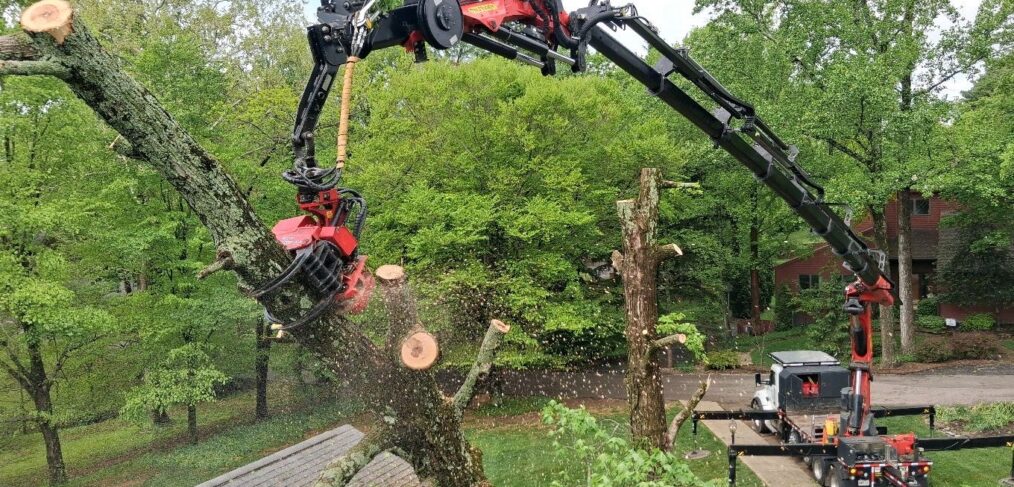
Mature tree in a Bloomington, Indiana residential yard

12 Questions to Ask Before Calling a Tree Service in Bloomington

Trees do a lot of quiet work in Bloomington — they shade backyards through humid summers, buffer wind and noise, and add real value to a property. But most homeowners don’t think much about their trees until something goes wrong: a branch comes down in a storm, a trunk starts leaning, or an ash tree suddenly declines. That’s exactly what a tree risk assessment Bloomington homeowners can trust looks like — and it doesn’t have to start with a phone call to an arborist. It starts with a few honest questions you ask yourself first.

Southern Indiana’s mix of severe summer storms and ongoing pest pressure (like Emerald Ash Borer) means small issues can turn into expensive emergencies if they go unnoticed. The good news: a little self-reflection before you pick up the phone can save you money, prevent disputes with neighbors, and help you walk into any conversation with a tree service already knowing what matters most to you.

Why Thinking It Through First Actually Matters

Skipping this step tends to backfire in predictable ways. For example, a tree near power lines or your roofline can look perfectly stable — until a windstorm proves otherwise. Similarly, assuming a tree is “the neighbor’s problem” can spark a dispute that outlasts the tree itself. And ultimately, homeowners who haven’t thought about their budget or goals ahead of time often end up either overspending on unnecessary work or settling for a quick fix that fails a season later.

Additionally, in a market where curb appeal matters, neglected trees can quietly work against your home’s value, while a well-maintained tree adds to it. In short, taking ten minutes to think through the questions below turns a reactive, stressful decision into a confident, informed one.

12 Questions for a Tree Risk Assessment Bloomington Homeowners Can Do Themselves

Work through these categories in order. By the end, you’ll have a clear picture of your tree’s condition, your priorities, and your budget — which makes any conversation with a professional faster and more useful.

Location & Risk Assessment

Signs of tree risk homeowners should watch for in Bloomington

Signs of tree risk homeowners should watch for in Bloomington

  • Where exactly is the tree located? Note its distance from power lines, your home, a garage, driveway, or a property line. Trees overhanging structures or utility lines usually mean more careful — and more costly — work.
  • Does the tree show signs of an immediate safety risk? Look for a noticeable lean, large dead limbs (sometimes called “widow-makers”), visible cracks in the trunk, or roots that appear to be lifting or damaging a foundation. A post-storm walk-around is a smart habit in southern Indiana.
  • How close is it to neighboring properties? Consider what could happen to an adjacent home, fence, or shared utility line if a limb or the whole tree came down — it’s easier to plan for this now than to resolve it after the fact.

Ownership & Legal Considerations

  • Who owns the tree? If the trunk base sits on or near a property line, talk to your neighbor and confirm ownership before any work begins.
  • Are there local regulations or permits to consider? Some municipalities and historic districts have rules about tree removal or trimming. Check with your local building or planning office if you’re unsure — requirements vary and are worth confirming directly rather than assuming.

Goals & Desired Outcomes

  • What’s my actual goal for this tree? Are you trying to preserve a healthy, valuable tree; manage its size and shape with pruning; or remove a hazard entirely?
  • Do I want a long-term health plan or a one-time fix? Specimen trees or ones with sentimental value are often worth an ongoing care plan rather than a single visit.
  • How important is this tree to my landscape and privacy? It’s fair to weigh emotional attachment against practical safety and upkeep — just be honest with yourself about which one is driving the decision.

Practical & Financial Realities

  • What’s my realistic budget? Larger or higher-risk removals — especially trees over 60 feet — generally cost more. Factor in stump grinding, debris cleanup, and any replanting you might want.
  • Do I want to keep any of the wood? Decide ahead of time if you’d like logs kept for firewood, mulch, or milling, versus having everything hauled away and recycled.
  • Am I prepared for the timeline and disruption? Depending on the scope, tree work can take anywhere from a few hours to a couple of days. Plan around family schedules or upcoming outdoor events.
  • When was the last time a professional looked at this tree? If it’s been over a year — or never — especially after a storm, it’s a good time to schedule an evaluation.

What Answering These Questions Gets You

Working through these 12 questions gives you clarity before you ever pick up the phone. You’ll walk into a conversation with a tree service already knowing your priorities, your budget range, and your concerns — which tends to lead to more accurate quotes, fewer surprises, and a better long-term outcome for your property.

Many homeowners find, through this process, that pruning or treatment is a smarter and more affordable option than full removal. Others confirm that proactive maintenance now is what prevents a costly emergency later.

Ready for a Professional Tree Risk Assessment Bloomington Homeowners Trust?

Self-assessment is a great starting point, but it’s not a substitute for a trained eye. For general background on what a professional evaluation typically covers, the International Society of Arboriculture has helpful homeowner resources. Once you’ve thought through your goals, budget, and concerns, Bluestone Tree can walk your property with you, answer questions in plain language, and put together a clear plan — whether that means tree trimming, pruning, plant health care, or full tree removal.

Call 812-824-3335 or request a free estimate to schedule a visit. Ask yourself the right questions first — then bring in an expert to help you protect what matters most.

This article is for general informational purposes. A professional on-site evaluation is recommended for an accurate assessment of your specific trees and property.

Photo of a tree care professional in safety gear performing tree work, illustrating what to look for when hiring a tree service in Bloomington, Indiana.

12 Questions to Ask Before You Hire a Tree Service in Bloomington, IN

12 Questions to Ask Before You Hire a Tree Service in Bloomington, IN

If a storm just took down a limb, an ash tree is finally succumbing to emerald ash borer, or you’re planning fall pruning, it’s tempting to call the first tree company that shows up in a search or hands you a business card. But when you hire a tree service, you’re trusting a crew with power equipment, heavy machinery, and sometimes a 60-foot tree, working just feet from your house.

Most tree work in Bloomington and Monroe County goes smoothly. But when it doesn’t, the fallout is real: driveways cracked by heavy equipment, lawns torn up after a wet week, or a tree pruned so poorly it becomes a bigger hazard than before. A few good questions upfront can save you from all of it.

Here are 12 questions worth asking any tree company before you sign anything — organized by what they actually protect: your safety, your property, and your wallet.

Credentials & Safety: Confirm They’re Qualified to Do the Work

Insurance and training aren’t paperwork — they’re what stands between you and a costly problem if something goes wrong.

1. Are you fully insured?

Ask for current certificates of both general liability and workers’ compensation insurance. A legitimate company will provide these without hesitation. This matters most on jobs near your house, driveway, or overhead power lines, where the risk of property damage is highest.

2. Is an ISA-certified arborist involved in the work?

International Society of Arboriculture (ISA) certification means an arborist has demonstrated knowledge of tree biology, proper pruning cuts, and risk assessment. Ask whether an ISA-certified arborist is planning or overseeing the job — not just whether the company employs one somewhere.

3. Does your crew follow OSHA safety standards?

This covers the basics: hard hats, harnesses for climbers, eye and hearing protection, and safe procedures around ladders, chainsaws, and rigging. Tree care is a hazardous industry, and OSHA outlines specific safety standards that responsible companies follow. A crew that skips safety gear on a bid walk is a preview of how they’ll run the actual job.

Photo of a tree care professional in safety gear performing tree work, illustrating what to look for when hiring a tree service in Bloomington, Indiana.

A certified crew member follows safety protocol during a tree removal in Bloomington, IN.

Logistics & Property Protection: Protect Your Yard, Not Just the Tree

The tree isn’t the only thing on your property that can get damaged.

4. What equipment will you use, and how will you access the tree?

Ask directly about cranes, bucket trucks, or heavy equipment, and how the crew plans to reach the tree without driving across your lawn or squeezing past tight fence lines.

5. How will you protect my lawn and driveway?

Reputable crews use plywood, mats, or planked paths to distribute weight and prevent ruts — especially important on Monroe County’s clay-heavy soil after rain, when a loaded truck can leave lasting tire tracks.

6. Is cleanup included in the price?

Confirm this covers raking debris, hauling logs and brush, and leaving the site clear — not just the big cuts. Ask what happens to the wood and chips; some companies will leave firewood-length rounds on request or recycle brush into mulch.

7. Does the quote include stump grinding?

Stump removal is often quoted separately from tree removal. Get this in writing so you’re not surprised by a stump sitting in your yard — or a follow-up invoice.

Contracts & Policies: Get It in Writing

Verbal agreements are where scope creep and surprise charges start.

8. Can I get a written, itemized estimate?

A serious company will put the scope of work, timeline, and total cost in writing before anyone touches a chainsaw. Be cautious of anyone who wants a verbal handshake deal, especially for larger removals.

9. What’s the realistic timeline for the job?

Ask for both a start date and an estimated completion window. This matters even more during storm season, when demand spikes and schedules can slip.

10. Who’s responsible if something is damaged?

Your contract should spell out what happens if a fence, roof, driveway, or landscaping is damaged during the work — and how it gets resolved.

Local Considerations for Bloomington and Monroe County

11. How do you handle storm damage or EAB-infested ash trees?

Local experience matters here. A company that regularly works in Monroe County will know which species are most at risk locally and how to prioritize hazardous limbs after a storm.

12. Do you offer tree risk assessments, and do you understand local permitting?

Some tree work — particularly larger removals or work near property lines — may require awareness of local ordinances. Ask whether the company can flag this for you or whether it’s the homeowner’s responsibility to check.

Bringing It Together

Asking these questions takes fifteen minutes and can save you thousands of dollars, and a lot of frustration, down the road. A company that answers clearly, provides documentation without pushback, and gives you a written estimate is showing you exactly how they’ll handle the job itself.

Need a straightforward tree assessment in Bloomington or the surrounding area? Contact Bluestone Tree for a written estimate and a clear explanation of the work before anything begins. Call 812-824-3335 or visit bluestonetree.com to schedule a consultation.

This guide is for general educational purposes. Always verify insurance, certifications, and references directly with any company you’re considering.

Leaning hardwood tree showing signs it may need removal in Bloomington, IN

Tree Removal Bloomington IN: 7 Warning Signs to Watch For

7 Signs a Tree Needs to Be Removed This Summer and Fall in Bloomington, IN

If you’re researching tree removal Bloomington IN options this summer or fall, you’re probably standing in your yard sizing up a tree that doesn’t look right anymore. Trees are one of the best features of a Bloomington-area property — in neighborhoods like Elm Heights, Renwick, Hyde Park, Hoosier Acres, and Green Acres, and across the wooded lots of Monroe County, Ellettsville, Spencer, Bedford, and Martinsville, mature hardwoods add shade, privacy, and real value to a home. But summer heat and storms — and fall’s leaf drop — tend to expose problems that were easy to miss the rest of the year. Here’s what to look for before deciding.

This guide walks through the most common warning signs that a tree has become a safety risk, with notes on how summer and fall conditions in South Central Indiana make those signs easier — or harder — to spot.

Why Summer and Fall Are the Seasons to Pay Attention

Summer brings heat, humidity, thunderstorms, and high winds — all of which can turn a weakened tree from “watch it” to “hazard” quickly. Fall strips the leaves away and reveals structural problems that were hidden all summer, while also bringing damp conditions that encourage fungal growth. Both seasons matter for another reason: Emerald Ash Borer (EAB) remains active across Indiana, and ash trees weakened by EAB can become brittle and unpredictable within just a few years of infestation.

On larger wooded or rural properties in the region, terrain, soil type, and exposure add extra variables. A visual check from the ground is a good start, but a proper risk evaluation from a trained professional is the most reliable way to know what you’re dealing with.

7 Signs a Tree May Need Removal

1. A New or Worsening Lean
A tree that has developed a noticeable lean — especially toward your house, garage, or power lines — is one of the clearest red flags. Summer storms and saturated fall soils can both accelerate an existing lean. Look closely for cracks or splits in the trunk or major limbs, which often indicate the structure has already started to fail.

2. Extensive Dead or Dying Branches
Large dead limbs in the canopy (sometimes called “widow-makers”) are a serious hazard on their own. In summer, watch for branches that never fully leafed out or canopy sections that look sparse. In fall, dead leaves that cling to branches long after the rest have dropped are a sign of decline — this is especially common in ash trees affected by EAB.

3. Signs of Disease or Pest Infestation

  • Emerald Ash Borer: According to the Indiana DNR Division of Forestry, small D-shaped exit holes, S-shaped tunneling under loose bark, increased woodpecker activity, and canopy thinning that starts at the top.
  • Fungal growth: mushrooms or shelf-like conks growing at the base or on the trunk, which usually point to internal decay. These often show up more in damp summer stretches or after fall rain.
  • Discolored or wilting foliage: premature leaf drop or a patchy, uneven canopy during peak growing season can signal root or vascular problems.

4. Root Damage or Poor Anchorage
Exposed or decaying roots, soil heaving near the base, or mushrooms in the root zone all suggest the tree isn’t well anchored. Nearby construction or soil compaction — common in growing parts of the Bloomington area — can contribute to this over time. Fall’s leaf drop tends to make root-zone issues easier to see.

5. Storm Damage
After any significant summer storm, it’s worth walking your property to check for broken limbs, torn bark, or cracks that run deep into the wood. A tree can look fine right after a storm and still have hidden internal damage that shows up as a failure months later.

6. Poor Location or Overcrowding
Trees planted too close to a house, with roots pressing on a foundation, or growing into power lines can become a long-term liability — even if they’re otherwise healthy. This is a common issue in Bloomington’s older, more established neighborhoods.

7. Significant Overall Decline
When more than half of a tree’s canopy shows deadwood, dieback, or decay, removal is usually the safer and more practical option compared to ongoing treatment.

Summer Watch-Outs (June–August)

Heat and humidity put extra stress on trees that are already weakened by pests or prior damage, and thunderstorms have a way of revealing structural weaknesses fast. EAB adult activity also peaks in summer, which is when D-shaped exit holes are easiest to spot. It’s worth walking your property after any heavy storm to check for new leans or fallen debris.

Late summer often brings drought stress on top of it — trees don’t handle sharp swings between wet and dry conditions well, so consistent, appropriate watering during dry stretches can go a long way toward reducing stress-related decline.

Fall Watch-Outs (September–November)

Once leaves drop, structural issues and dead branches become much easier to see. Fungal fruiting bodies also tend to show up more in fall’s damp conditions. This makes fall a good window for a professional evaluation before winter storms arrive, since dormant-season pruning or removal typically has the least impact on the surrounding landscape. It’s also a good time to plan replanting with native species suited to the area.

When Pruning or Treatment Might Be Enough

Not every issue calls for full removal. Minor deadwood, early-stage pest problems, or small structural defects can often be addressed with pruning, cabling, or targeted treatment instead. A qualified arborist, following ISA tree risk assessment guidelines, should be able to walk you through the options honestly — removal is typically recommended only when the risk clearly outweighs the value of trying to save the tree.

What a Professional Tree Assessment Looks Like

Tree removal Bloomington IN homeowners can rely on should always start with an on-site visit from a trained arborist, who checks the tree against established risk-assessment standards rather than relying on a quick visual guess. A good assessment should leave you with a clear picture of the tree’s condition and a straightforward set of options — pruning, removal, or continued monitoring — so you can make an informed decision for your property.

Frequently Asked Questions

How can I tell if my ash tree has Emerald Ash Borer?
Look for small D-shaped exit holes, canopy thinning that starts at the top, bark splitting, and increased woodpecker activity. Symptoms can look similar to other types of stress, so professional confirmation is the best way to know for sure.

Is it safe to wait until fall to remove a tree showing signs in summer?
It depends on severity. Minor issues can often wait. But a tree that’s leaning, cracked, or heavily damaged near a structure should be addressed promptly rather than waiting out the season.

Will my homeowners insurance cover tree removal?
This varies by policy and situation, so it’s worth checking directly with your insurer. Coverage is more common for trees that fall on a structure during a storm, and less common for preventive removal. Photos and a written assessment from a professional can help support a claim either way.

Do I need a permit to remove a tree in Bloomington?
Permit rules for tree removal Bloomington IN properties can vary depending on your location — for example, some historic districts have additional guidelines. Check with the City of Bloomington or Monroe County directly for current rules before removing a tree.

What should I do after removal?
Stump grinding and replanting with a native, well-suited species are the two most common next steps. Local resources like the Monroe County Soil & Water Conservation District can help with species selection.

How often should trees be assessed?
An annual check is a reasonable baseline for mature trees, with an additional look after any major storm or during high-risk seasons like summer and fall.

Bluestone Tree crew providing Bloomington tree service for a residential property

Professional residential tree care and tree service in Bloomington and South Central Indiana.

Tree Removal Bloomington IN: Protect Your Property This Season

Catching these signs early — during summer or fall, before winter storms arrive — can prevent costly emergencies and help preserve the trees that make this region’s neighborhoods worth living in. If you’re seeing any of the warning signs above, it’s worth having a professional take a look before deciding what to do next.

Bluestone Tree provides tree risk assessments and removal services throughout Bloomington, Ellettsville, Bedford, Martinsville, and the surrounding South Central Indiana area. Call 812-824-3335 or visit bluestonetree.com to schedule an evaluation.

Every property is different — the guidance above is general in nature. A site-specific evaluation from a qualified arborist is the most reliable way to assess your tree’s condition.

Arborist safely removing a large tree at a Bloomington IN home

Tree Removal Cost in Bloomington: A 2026 Homeowner’s Price Guide

Tree Removal Cost in Bloomington: A 2026 Homeowner’s Price Guide

When a storm rolls through Monroe County or a mature tree starts dropping limbs over the driveway, one of the first questions Bloomington homeowners ask is what it will cost to take it down safely. Knowing the typical tree removal cost Bloomington homeowners pay in 2026 helps you budget ahead, spot a fair quote, and avoid both overpaying and cutting dangerous corners.

Whether you’re in an established neighborhood like Renwick, Elm Heights, Hyde Park, or Green Acres, or further out toward Ellettsville, Bedford, or Monroe Lake, mature trees define the local landscape. They add shade, privacy, and real property value — but once they become diseased, storm-damaged, or structurally risky, professional removal becomes the safe choice. This guide breaks down realistic 2026 price ranges, the factors that move the number, when pruning beats removal, and what to expect from a reputable local crew.

Why Tree Removal Costs Vary So Much in Bloomington

Unlike a flat-rate service, tree removal pricing is highly customized — and for good reason. No two properties in Bloomington are the same, especially across the wooded, hilly lots common in east and southeast Bloomington and the rural edges of the county.

That’s why ethical providers quote after an on-site look rather than throwing out a phone number sight-unseen. Access, terrain, proximity to the house, tree condition, and cleanup all shift the price. Local demand also plays a role: storm seasons, ongoing Emerald Ash Borer (EAB) damage, and routine maintenance all affect scheduling and availability across Monroe County.

Typical Tree Removal Price Ranges in Bloomington, IN

The ranges below are general regional estimates for context only — not a quote. Your actual price depends on the specifics of your property and requires a site visit.

  • Small trees (under 30 ft): roughly $450–$1,200. Younger ornamentals, volunteer trees, and smaller yard specimens with easy access. Basic removal and initial debris handling are usually included.
  • Medium trees (30–60 ft): roughly $1,200–$2,500. Many residential trees in neighborhoods like Elm Heights or Renwick land here. Nearness to structures or added equipment can push toward the top of the range.
  • Large trees (over 60 ft): commonly $2,500–$5,500+. Mature oaks and maples in Bloomington’s older areas often need a crane or specialized rigging, especially in tight spaces near homes.

Complex or emergency jobs can exceed these ranges. The most reliable number always comes from an on-site evaluation with a clear, itemized quote.

Additional Costs to Budget For

Removal rarely ends at felling the tree. Plan for related work:

  • Stump grinding: about $250–$500+, depending on diameter and access. Grinding stops regrowth and removes a tripping hazard so you can replant or landscape.
  • Debris removal and hauling: often bundled into a professional quote. Many crews recycle material into mulch or wood chips rather than sending it to a landfill.
  • Crane or specialized equipment: can add $500–$2,000+ for large or hard-to-reach trees common on Bloomington’s sloped lots.
  • Emergency or post-storm work: may carry a premium due to urgency and safety demands, though honest providers keep pricing fair even after major weather events.
  • Permits and compliance: most private-property removals proceed straightforwardly, but city right-of-way trees (often the strip between the road and sidewalk) and some protected or historic areas may require city approval. Always confirm before work begins.

Ask for an itemized proposal so you understand the full scope.

What Affects Tree Removal Cost Bloomington Homeowners Pay

Several factors determine your specific price:

  1. Size and species — larger, denser, heavier trees take more labor and equipment.
  2. Location and access — trees near homes, power lines, fences, or on slopes raise costs due to rigging and risk.
  3. Tree condition — dead, leaning, or storm-damaged trees over structures are higher-risk and demand extra care to remove without property damage.
  4. Debris volume — more branches and trunk mean more hauling time.
  5. Crew training and equipment — qualified crews using proper safety protocols and modern gear reduce the risk of injury and property damage.
  6. Season and demand — post-storm periods run busy, while dormant-season work sometimes offers better availability.

Tree Removal vs. Pruning: Which Does Your Tree Actually Need?

Not every problem tree needs to come down. In many cases, an early consultation with a certified arborist catches issues while they’re still treatable — meaning targeted pruning or plant health care can extend a tree’s life and keep it safe at a lower cost than full removal.

Professional pruning scope varies widely, so it’s worth an assessment before assuming the worst. A trustworthy company will recommend removal only when safety or tree health genuinely requires it.

Signs a Tree May Need Removal

  • Extensive decay or large dead branches over structures
  • A significant lean toward your home
  • Severe EAB or pest damage
  • Roots threatening a foundation or driveway
  • Repeated dropping of dead limbs or thinning canopy
  • Mushrooms or fungi growing at the base or over the roots
  • Consistent dieback in the upper canopy

If you’re seeing several of these, it’s worth having a professional take a look sooner rather than later.

Why Professional Removal Is Worth It

A clean, professional removal protects your property value, reduces liability and insurance risk, and keeps your family safer than a DIY attempt on a large or compromised tree. It also opens space for smarter replanting suited to your yard — and in Bloomington’s established neighborhoods, a tidy job preserves curb appeal and neighborhood character.

What the Professional Process Looks Like

A quality provider follows a clear, structured approach:

  1. Contact and scheduling — a prompt response, especially for potential hazards.
  2. On-site assessment — a qualified arborist evaluates the tree, the risks, and your options.
  3. Detailed quote — a transparent breakdown with no hidden fees.
  4. Execution — safe, efficient work with minimal disruption and full cleanup.
  5. Follow-up — guidance on replanting, maintenance, or ongoing care.

Bluestone Tree follows this standard with trained, certified staff, responsible recycling of wood material, and a focus on educating homeowners rather than upselling them.

Frequently Asked Questions

How long does tree removal take?
Most residential jobs finish in a few hours to a full day, depending on size and complexity.

Will my insurance cover it?
Sometimes — storm damage or a tree that has fallen on a structure may be covered, and documentation from a professional assessment helps. Coverage varies by policy, so check with your insurer.

Do I need a permit in Bloomington?
Most private-property removals typically don’t require one, but city right-of-way trees and protected or historic areas may. Confirm with the City of Bloomington for your specific situation.

What about the stump?
Many homeowners choose to grind the stump right after removal for a clean, ready-to-landscape yard.

Get a Straight Answer on Your Tree

General ranges are a useful starting point, but the only accurate tree removal cost Bloomington figure for your property comes from a professional on-site evaluation. If you’re worried about a tree in Renwick, Elm Heights, or anywhere in the greater Bloomington and South Central Indiana area, it’s better to act before it becomes an emergency.

Bluestone Tree offers on-site assessments, transparent itemized quotes, and safe, thorough work. Call 812-824-3335 or request a free estimate to get recommendations tailored to your property.