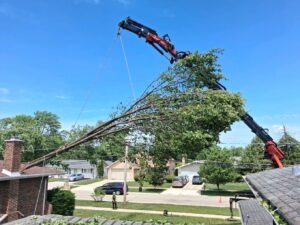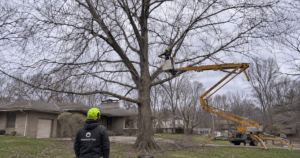
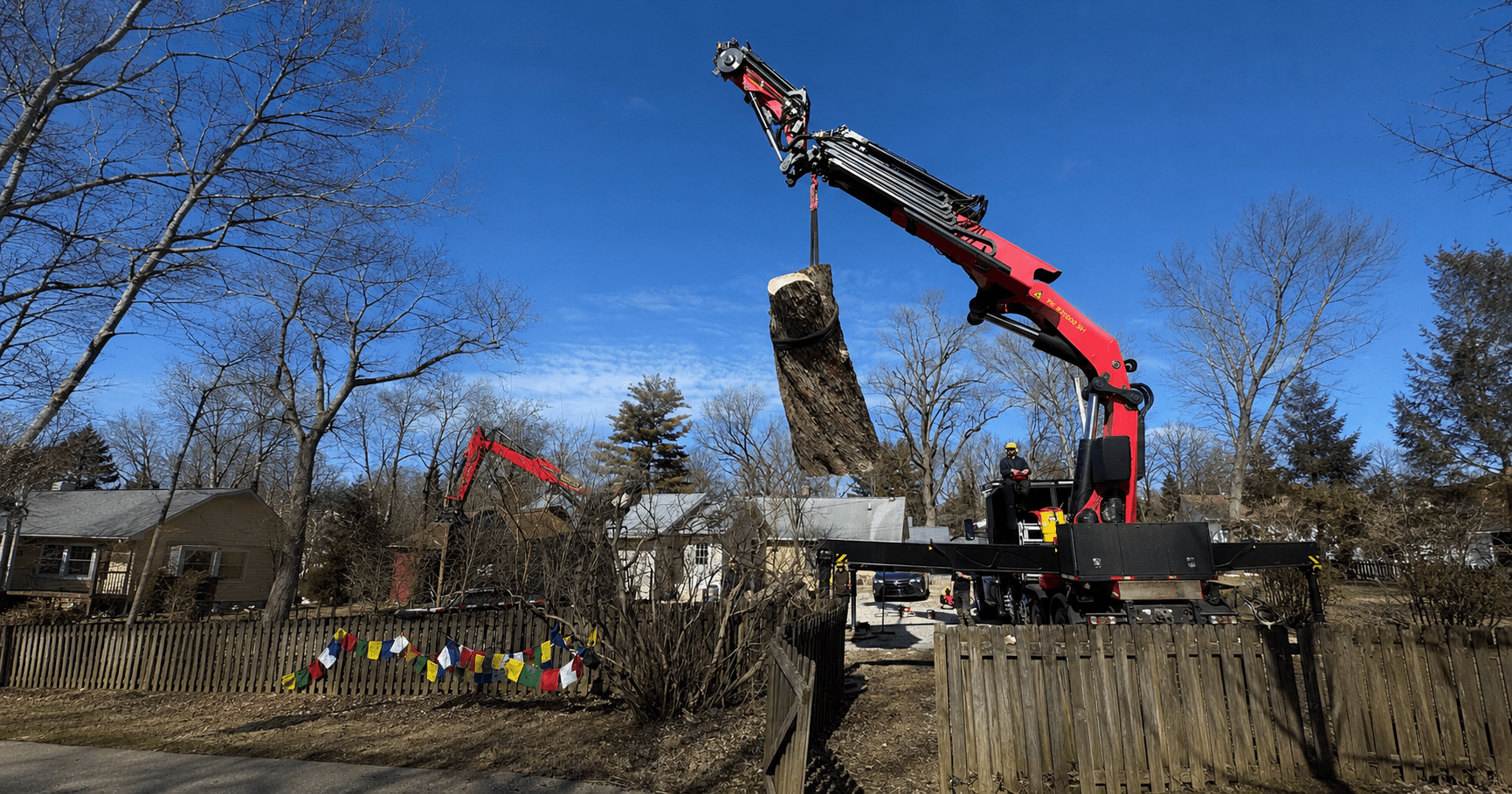
Deciding whether a tree stays or goes is one of the harder calls a homeowner makes, partly because both mistakes are expensive. Wait too long on a hazardous tree and a summer storm makes the decision for you, usually at three in the morning and usually onto something you own. Move too fast and you lose forty years of shade you could have kept. Hazardous tree removal Bloomington property owners are weighing right now almost always comes down to one question: is this tree actually dangerous, or does it just look rough?
There are established criteria for answering that. Here they are, along with the situations where removal is usually the wrong answer.
Why This Decision Feels Riskier Than It Should
Three things make an objective assessment hard.
Trees decline slowly and invisibly. Internal decay, girdling roots, and pest damage can progress for years with little visible evidence. Frequently the first obvious symptom is a limb on the driveway. By the time the canopy thins dramatically, the structural problem underneath it is usually well advanced.
Attachment clouds judgment. Homeowners who have watched a tree grow for thirty years are not neutral observers, and they know it — which is why so many people stay stuck rather than decide.
The work is disruptive. Taking down a large tree near a house is a real project, and the empty space afterward can feel jarring without a replacement plan.
None of that changes what the tree is doing. It just makes it harder to see clearly, which is the argument for getting a second set of eyes on it.
Hazardous Tree Removal Bloomington Homeowners Shouldn’t Put Off
Arborists assess trees against a consistent framework: the likelihood of failure, the likely size of what fails, and the target — what gets hit if it does. A dead tree in the back of a wooded lot and a dead tree over a driveway are the same tree with very different risk ratings. These five situations are where removal is typically the responsible call on a Bloomington-area property.
1. The Tree Presents a Clear Safety Hazard
Removal is warranted when failure is reasonably likely and something valuable is underneath. Warning signs:
- A lean that has visibly worsened, particularly with soil heaving or cracking on the uphill side of the root plate
- Large dead or hanging limbs over roofs, driveways, decks, or play areas
- Major cracks, seams, or open cavities in the trunk or primary limbs
- Root damage or visible root decay, especially where construction, trenching, or grade changes happened in the last several years
- Mushrooms or hard shelf fungi at the base of the trunk
One defect on its own is not a verdict. Several together, near a target, usually is.
2. Advanced Disease or Pest Damage
Some conditions progress past the point where treatment is realistic. In Monroe County this most often means:
- Emerald ash borer infestation that has already taken a substantial share of the canopy
- Fungal fruiting bodies indicating internal wood or root decay
- Vascular disease or root rot that has compromised structural strength
Important distinction: pest or disease activity alone does not mean a tree has to come down. Early-stage problems frequently respond to plant health care and corrective pruning. It is the combination of advanced decline and compromised structure that makes removal necessary. Our companion guide on diseased tree removal covers that judgment call in more depth.
3. Severe or Irreparable Storm Damage
High-wind events regularly leave trees that pruning cannot fix — major trunk failure, loss of several structural limbs, severe splitting through a union, or a lifted root plate. Other trees look catastrophic and recover fully. The difference is not obvious from the ground, which is why a post-storm assessment is worth the call before anyone decides anything. If a damaged tree is currently threatening a structure, that is emergency tree service territory, not a scheduled appointment.
4. Structural Defects That Can’t Be Reliably Managed
Some trees carry built-in weaknesses: co-dominant stems with included bark, oversized limbs on poor attachments, or a documented history of repeated failures. Cabling, bracing, and reduction pruning can manage many of these. When the defect sits directly over a house and cannot be adequately mitigated, removal is usually the more honest long-term answer than an annual inspection and hoping.
5. The Tree Is in the Wrong Place
Occasionally the tree is healthy and the location is the problem — mature size in permanent conflict with a foundation, utility line, sidewalk, or septic field. Where root pruning and canopy reduction can’t resolve the conflict without wrecking the tree, removal and replanting somewhere better is the durable fix. Repeatedly cutting a tree back to fit a space it was never going to fit is not tree care.
When Removal Is Usually the Wrong Answer
Just as useful as knowing when to remove is knowing when not to. Preserve the tree when you’re looking at:
- A healthy tree with only minor deadwood — that’s a tree trimming job, not a removal
- Structural problems in a young or mid-age tree that pruning can correct over a few cycles
- A large, well-structured specimen with high landscape or ecological value and no significant defects
- Cosmetic complaints — leaf litter, shade on the lawn, acorns
- Treatable pest or disease activity caught early
Any company that recommends removal on every visit is telling you something about the company rather than about your trees.
The Two Species That Come Up Most Often Here
Ash. Emerald ash borer was confirmed in Indiana in 2004 and has now been detected in all 92 counties, per the Indiana DNR Division of Entomology and Plant Pathology. An untreated mature ash in Monroe County is on a timeline, and dead ash becomes brittle quickly — which makes it more dangerous and more expensive to remove the longer it stands.
Silver maple. Planted heavily across South Central Indiana subdivisions decades ago for its growth rate, silver maple is now aging into the phase where that growth rate becomes the problem: soft wood, included bark at major unions, and heavy limbs with marginal attachments. A great many of the trees we assess are not diseased at all. They are simply large, old, and structurally unsuited to standing over a roof.
Before You Cut: Make Sure the Tree Is Yours
This step gets skipped constantly. Inside Bloomington city limits, planting, maintenance, and removal of trees on city property, in the public right-of-way, and along city streets is handled by the City of Bloomington Parks and Recreation Department’s Urban Forestry Program — not by the adjacent property owner. The strip between the sidewalk and the street is frequently right-of-way even though homeowners mow it, and the tree standing in it is very often not theirs to remove.
Two things worth knowing before you schedule anything:
- If the tree is near the street, confirm with the City’s Urban Forestry Program whether it sits in the right-of-way
- The City also runs a Tree Assistance Program, through which eligible homeowners can apply for financial assistance with tree removal, pruning, and planting on land inside city limits
Properties in Ellettsville, Bedford, Martinsville, and unincorporated Monroe County fall under different rules — check with your local authority if the tree is anywhere near a public road.
What to Do Once You’ve Decided
- Get a site-specific evaluation in writing. A qualified arborist should document the tree’s condition, lay out the realistic options — pruning, treatment, cabling, or removal — and explain the reasoning, not just quote a number.
- Ask what happens if you wait. A straight answer to this separates a risk assessment from a sales pitch. Sometimes the honest answer is “not much, check it again next year.”
- Choose on process, not just price. Rigging plan, property protection, insurance, and cleanup are what determine whether removal day damages your lawn, fence, and irrigation.
- Decide what happens to the wood. Logs can be milled, kept as firewood, or processed into organic mulch that goes back into your beds instead of into a landfill.
- Plan the replacement before the removal. Grind the stump, amend the soil, and choose a species suited to the site. A gap with a plan feels completely different from a gap.
Frequently Asked Questions
Does a leaning tree always need to be removed?
No. Many trees lean naturally toward light and have grown reaction wood to compensate — those are usually stable. The concern is a lean that has changed, particularly with cracked or heaving soil on the opposite side of the trunk. A new lean after a storm should be assessed promptly.
Can a tree with a hollow trunk be saved?
Sometimes. Trees can remain structurally sound with substantial hollowing as long as enough intact wood remains around the perimeter. The proportion of sound wall to cavity matters more than the presence of a hole, and assessing that reliably requires an on-site evaluation.
How do I know if my tree is dead or just dormant?
Scratch a small area of bark on a young twig with a fingernail. Green underneath means living tissue; brown and dry across multiple branches suggests the limb or tree has died. Check several spots on different sides before concluding anything.
Do I need permission to remove a tree in Bloomington?
For a tree entirely on your private property, generally no. For a tree in the public right-of-way or along a city street inside Bloomington city limits, the City’s Urban Forestry Program has jurisdiction — confirm with them before scheduling any work.
Is it cheaper to remove a tree before it dies?
Frequently, yes. Dead and decayed wood is unpredictable to climb and rig, which means more equipment, more time, and more caution. Removing a declining tree on your own schedule is generally simpler than removing a dead one, and far simpler than clearing one off a roof.
Get a Straight Answer About Your Tree
Deciding when to cut down a tree doesn’t have to be guesswork or a gut call. Clear criteria, a professional assessment, and a plan for what comes next turn it into ordinary property maintenance.
If you’re looking at a tree you’re unsure about, Bluestone Tree provides on-site evaluations across Bloomington, Ellettsville, Bedford, Martinsville, and South Central Indiana. We’ll tell you what we see, what your options are, and what happens if you do nothing — including when the answer is that the tree is fine and you should leave it alone. When removal is the right call, we handle it carefully and clean up completely.
Call 812.824.3335 or request a free estimate.
This guide is for educational purposes. Tree conditions vary widely, and an on-site evaluation by a qualified arborist is the most reliable way to assess any specific tree.