Mulching trees for winter is one of the simplest, lowest-cost ways to protect them through cold weather. A good layer of organic mulch helps insulate roots, holds moisture in the soil, evens out temperature swings, keeps weeds down, and slowly improves the soil as it breaks down.
Bloomington winters bring plenty of freeze-thaw cycles, and dry falls are not unusual. In those conditions, a properly mulched root zone can make a real difference in how well trees handle winter stress and how strongly they leaf out in spring. The key word is properly. Mulch applied the wrong way can do more harm than good.
This guide covers why mulch matters, how deep and wide to spread it, which materials work best, and the mistakes to avoid.
Why Mulch Matters for Trees in Winter
Tree roots do best in steady conditions. When soil freezes and thaws over and over, shallow roots are exposed to stress, and small, newly planted plants can even be pushed up out of the ground (called frost heaving). A layer of mulch works like insulation, keeping soil temperatures more stable through those swings.
Mulch also helps trees in winter by:
- Reducing moisture loss from the soil surface
- Buffering shallow roots against extreme cold
- Protecting the soil surface from compaction and erosion
- Limiting competition from weeds and turfgrass
- Adding organic matter that improves soil structure and fertility over time
Newly planted and young trees benefit the most because their root systems are still developing. Mature trees benefit too, especially when the mulched area is wide.
When to Start Mulching Trees for Winter
Fall is a great time to apply new mulch or refresh an existing ring, ideally before the ground freezes. That gives the mulch time to settle and start moderating soil temperatures heading into winter.
If you mulched in spring or summer, check the depth this fall. Organic mulch breaks down over the growing season, so it may need a light top-up. If the soil is dry, water the root zone before you mulch. The mulch will help hold that moisture in. Our guide to watering trees before winter covers when and how much to water.
How Deep and How Wide Should Mulch Be?
Depth: 2 to 4 Inches
- Less than 2 inches doesn’t do much for moisture or temperature.
- More than 4 inches can limit the oxygen and water reaching the roots and keep the soil too wet.
Coarser materials like wood chips can sit at the deeper end of that range. Finer materials should stay closer to 2 inches.
Width: Go Wide, Not Deep
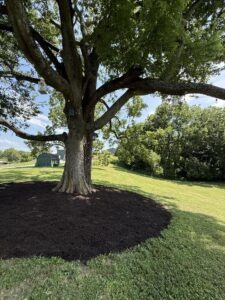
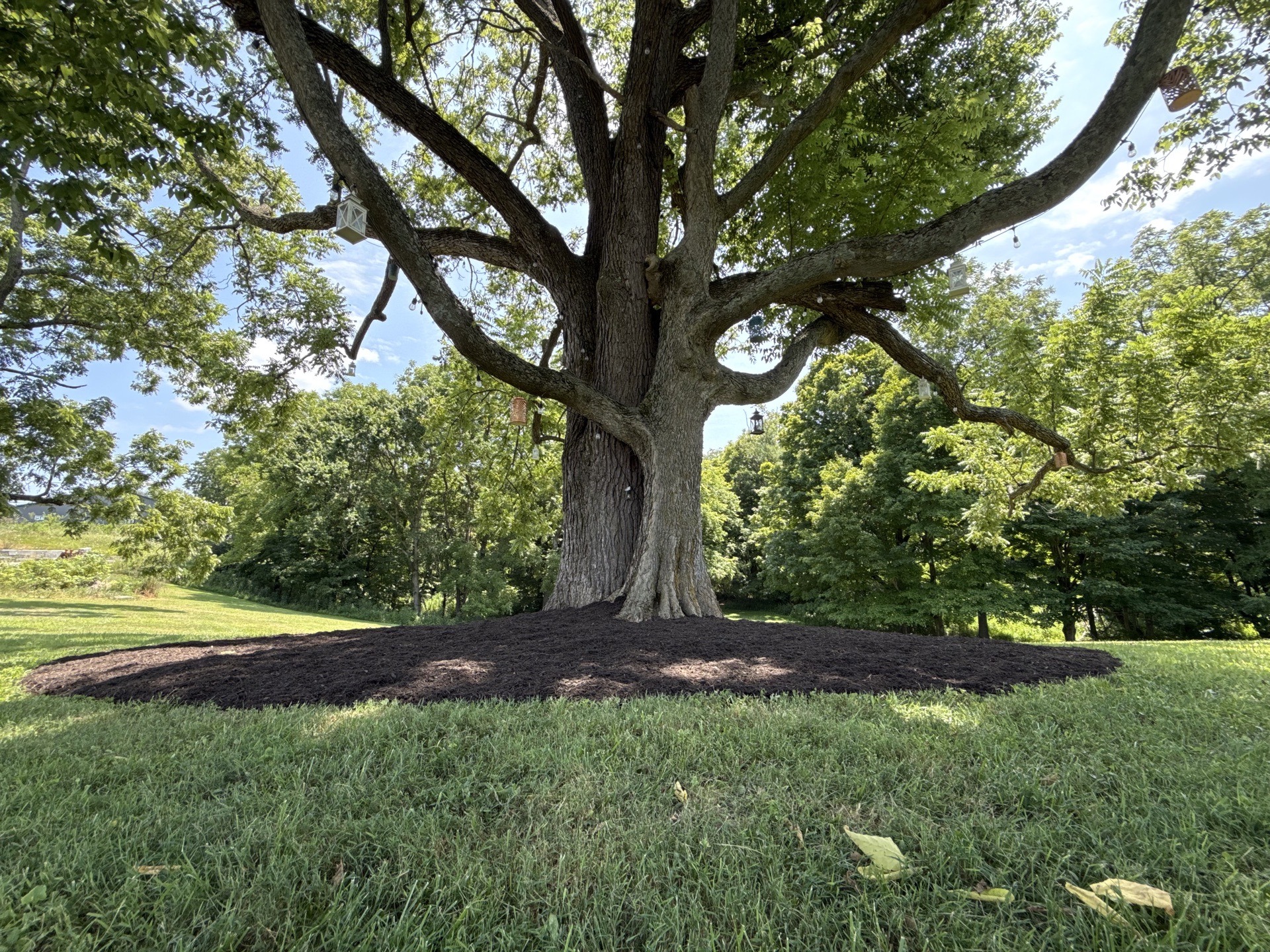
Spread mulch as far toward the drip line (the outer edge of the branches) as is practical. For young trees, even a ring 3 to 6 feet across helps. For larger trees, a wide ring does far more good than a small circle at the base.
Keep It Off the Trunk
This is the most important rule. Leave a gap of at least 1 to 2 inches between the trunk and the start of the mulch, and a little more around large trees. The root flare, where the trunk widens as it meets the roots, should always be visible. Mulch piled against bark holds moisture against the trunk, which can lead to decay, attract bark-chewing rodents, and encourage roots to grow up into the mulch and circle the tree.
Best Mulch Materials for Trees
Organic mulches are the clear choice for trees. They conserve moisture, moderate soil temperature, and feed the soil as they break down. Inorganic options like rock or rubber do none of the last part.
Arborist Wood Chips and Whole-Tree Mulch
Mulch made from whole trees, including both woody material and leaves, is widely considered the best option for tree health. It holds moisture, moderates temperature, and suppresses weeds well, and the mix of materials breaks down gradually to support soil life and structure. Coarser natural wood chips are a great fit for established trees, large mulch rings, and naturalized areas because water passes through them easily.
At Bluestone Tree, we recycle local tree material into organic mulch products, including our Premium Whole Tree Mulch and wood chips. Using local material keeps it in the community and returns organic matter to the soil it came from.
Shredded Leaves
If you have mature trees and a yard full of fall leaves, shredded leaves make a practical, free mulch. Run them over with a mower first. Whole leaves in thick layers tend to mat together and block water and air.
Materials to Use Carefully or Avoid
- Fresh grass clippings: mat down and restrict air and water movement
- Thick layers of whole leaves: form a dense, soggy mat
- Fine sawdust in thick layers: compacts and sheds water
- Rubber or rock: add no organic matter to the soil
- Sour-smelling mulch: mulch that has sat in a large, wet pile can ferment. If it smells sour or feels hot, spread it out to air before using it near plants.
How to Mulch a Tree Step by Step
- Clear grass, weeds, and debris from the area you plan to mulch.
- Water the root zone if the soil is dry, which is especially important in fall.
- Spread mulch in an even layer 2 to 4 inches deep.
- Pull mulch back from the trunk so no mulch touches the bark and the root flare stays visible.
- Shape a wide, flat ring (think doughnut, not volcano).
- Check it once or twice a year and top up only as needed to keep the right depth.
Fixing a Mulch Volcano
If mulch has been piled against a trunk, gently pull the excess away and spread it outward into a flat ring until the root flare is exposed. If the flare has been buried under soil or years of built-up material, an arborist can evaluate the root collar for girdling roots or bark damage before you dig.
Newly Planted vs. Established Trees
Newly planted trees: A proper mulch ring is one of the most helpful things you can give a new tree. It reduces transplant stress, holds moisture, and steadies soil temperatures during the first few winters. Mulch beyond the root ball to encourage roots to spread outward.
Established trees: Keep the ring maintained, and consider widening it over time. A larger mulched area means less competition from turf and a healthier root zone.
Common Mulching Mistakes to Avoid
- Volcano mulching: piling mulch high against the trunk. It is common and one of the most harmful mistakes.
- Spreading mulch deeper than about 4 inches
- Burying the root flare
- Using sour-smelling mulch straight from a large pile
- Letting whole leaves form a dense mat
- Adding new mulch every year without checking the depth already there
- Piling mulch against house foundations or siding where it holds moisture against the structure
The good news is that most of these are easy to fix with a rake and a little time.
How Mulch Fits Into Your Winter Tree Care Plan
Mulch works best as part of a simple fall routine:
- Deep watering when the soil is dry, before the ground freezes
- Trunk protection for young or thin-barked trees
- Removing dead or hazardous branches through proper pruning
- Checking soil moisture during winter thaws
When to Call a Bloomington Arborist
Most homeowners can mulch their own trees. Consider calling an arborist if:
- Trees are already showing stress, thinning, or decline
- Mulch has been piled against trunks for years and you’re worried about root collar problems
- You’re caring for many trees or high-value specimens
- You want mulching built into a bigger plant health care plan that includes pruning and a look at tree structure
Take a Quick Walk Around Your Trees This Fall
Mulching trees for winter is one of the highest-value, lowest-cost things you can do for your landscape. Look at the base of each tree. If you see bare soil, a thin layer, or mulch piled against the trunk, a few minutes with a rake and a fresh 2 to 4 inch ring can set your trees up for a healthier spring.
Need mulch, or want an arborist to look at your trees? Call Bluestone Tree at 812.824.3335, browse our mulch products, or request an estimate.
Sources: Purdue Landscape Report, Re-mulch Your Trees; Purdue Landscape Report, Simple Steps to Care for Your Tree: Mulching; Penn State Extension, Proper Mulching; University of Missouri Extension, Sour Mulch.