Evergreens give Bloomington landscapes color and structure all year, but winter puts them in a tough spot. Evergreen winter burn happens when needles and leaves keep losing moisture through the cold months while frozen soil prevents the roots from replacing it. The result is browned, scorched, or dead foliage that often does not show up until late winter or early spring. The good news is that the right preparation in fall, plus a little protection for your most exposed plants, can go a long way toward reducing the damage.
This guide explains why winter burn happens, which evergreens are most at risk in South Central Indiana, how to protect them, and what to do if you see browning in spring.
What Is Evergreen Winter Burn?
Unlike deciduous trees, evergreens keep their foliage through winter, and that foliage keeps releasing water. As Purdue Extension explains, when the ground is frozen and cold temperatures come with high winds, plants keep losing moisture without being able to replace it. This drying out is also called winter desiccation.
Several factors make it worse:
- Frozen soil limits how much water roots can take up.
- Dry winter air and wind pull moisture from needles and leaves.
- Bright winter sun, especially on south and west exposures, warms foliage and increases water loss.
- Rapid temperature swings and extreme cold can add further tissue injury.
What Winter Burn Looks Like
Needles or leaves turn brown, tan, or reddish-brown, often starting at the tips or on the side facing the wind and sun. Broadleaf evergreens like boxwood, holly, and rhododendron may show browned or curled leaf edges. In severe cases, whole branches or sections of the plant die back.
Because symptoms often appear weeks after the injury, winter burn is sometimes mistaken for a disease or insect problem. If you are not sure what you are looking at, an arborist can help sort it out before you treat or remove anything.
Which Evergreens Are Most at Risk in Bloomington?
Any evergreen can develop winter burn under the right conditions. Purdue Extension notes it is especially common on boxwood, holly, rhododendron, and most conifers. In our area, we most often see it on:
- Arborvitae, especially upright types used for screening
- Boxwood
- Hollies
- Rhododendrons
- Yews
- Spruces and pines planted in exposed sites
- Newly planted evergreens of any species, since their root systems are still limited
Location matters as much as species. Risk goes up for evergreens that are:
- Planted in windy, open spots or on south and west exposures
- Near light-colored walls or pavement that reflect extra sun and heat
- Close to driveways, sidewalks, or roads where deicing salt builds up
- Already stressed going into winter by drought, poor planting, or root damage
When Does Winter Burn Happen?
Damage usually develops during mid to late winter, but it often does not become obvious until temperatures warm and plants start growing again in spring. That is why prevention needs to start in fall, before the ground freezes.
How to Protect Your Plants From Evergreen Winter Burn
The most effective approach combines good soil moisture, physical protection for exposed plants, and smart plant placement over the long term.
1. Water Deeply Before the Ground Freezes
Going into winter with enough soil moisture is one of the most important things you can do for your evergreens.
- Water deeply in late fall if the soil is dry and not yet frozen.
- Water slowly over the root zone so it soaks in rather than running off.
- Give newly planted evergreens extra attention through their first two to three winters.
- During winter thaws, water again if conditions have been dry and the soil can absorb it.
- Avoid overwatering soggy soils, especially in poorly drained areas.
2. Apply or Refresh Mulch
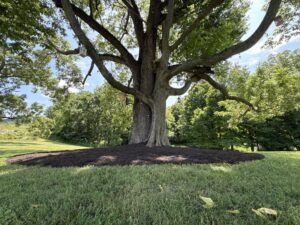
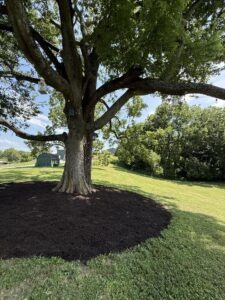
A 2 to 4 inch layer of organic mulch over the root zone helps hold soil moisture and moderate soil temperatures. Keep mulch pulled back a few inches from trunks and stems so the root flare stays visible. Mulch and fall watering work best together.
Natural wood chips and organic whole-tree mulch are good options for protecting roots and improving soil over time. Bluestone Tree produces locally sourced organic mulch that works well for this.
3. Screen Exposed Plants From Wind and Sun
For your most vulnerable evergreens, a simple burlap screen can cut down on drying wind and winter sun.
- Set screens on the side facing prevailing winter winds, often the north or west, and on the south or southwest side for sun exposure.
- Use stakes and stretch burlap between them rather than wrapping the plant itself. Iowa State Extension recommends keeping screens at least 6 inches from the foliage.
- Never wrap plants tightly or use plastic, which can trap moisture and cause temperature swings.
- Check screens after storms, and take them down in spring once the risk of harsh winter weather has passed.
4. Use Anti-Desiccant Sprays Carefully, If at All
Anti-desiccant (anti-transpirant) sprays form a temporary film on foliage meant to slow water loss. Research results on how well they prevent winter burn are mixed, so think of them as an optional extra, not a substitute for watering and mulching. If you use one:
- Use only on species listed on the product label. Some products should not be used on certain plants, such as arborvitae or juniper.
- Do not spray blue spruce or other evergreens with a waxy blue coating, since the spray can strip that natural coating and color.
- Wait until plants have hardened off and gone dormant in late fall. Spraying too early can reduce the product’s value.
- Apply on a dry day when the spray has time to dry before temperatures drop below freezing.
- Follow label directions on reapplication during winter.
For high-value or hard-to-replace plants, talk with an arborist before applying anything.
5. Avoid Late-Season Stress
- Skip heavy pruning of evergreens in late summer and fall, which can push tender new growth.
- Avoid late-season nitrogen fertilizer for the same reason.
- Protect plants near sidewalks and driveways from deicing salt spray and runoff. Yews are especially sensitive to salt, and salt injury can look a lot like winter burn.
6. Choose the Right Plant for the Right Spot
For long-term prevention, think about winter exposure before planting. Evergreens in sheltered spots, such as the north or east side of a home, usually see less winter burn than those in open, windy, or south-facing locations near pavement. Also consider drainage, sunlight needs, and mature size so the plant can thrive year-round.
What to Do If You See Winter Burn
Brown foliage from evergreen winter burn is discouraging, but do not rush to cut or replace plants. Here is how to respond:
- Wait for spring growth. Brown needles and leaves will not turn green again, but branches with living buds can still push new growth. Give plants time before making major pruning decisions.
- Know your plant. Pines, spruces, and firs cannot replace dead needles on the damaged part of a twig, so expect some thin spots as brown needles drop. Yews and arborvitae can often be pruned back and fill in with new growth.
- Remove what is clearly dead. Once new growth begins, prune out branches that did not leaf out.
- Support recovery. Keep up good watering and mulching through the following growing season.
- Look at the bigger picture. Severe or repeated winter burn can mean a plant is poorly suited to its location or dealing with root or soil problems. A professional evaluation can help before you replace it.
Part of a Complete Fall Tree Care Plan
Evergreen protection works best alongside the rest of your fall prep:
- Deep watering of high-priority trees and shrubs when soil is dry
- Correct mulching around trees and beds
- Trunk protection for young, thin-barked deciduous trees prone to sunscald and frost cracks
- Inspection and removal of hazardous branches when appropriate
- Checking trees and shrubs after ice or heavy snow
Seasonal Timeline for Bloomington and Monroe County
- Late October to November: Check soil moisture, water as needed, mulch, and install burlap screens. Apply anti-desiccants only after plants are dormant and only if the product suits the species.
- December to February: Watch the weather. Water during thaws if the soil is dry and can absorb it, and check screens after storms.
- Early spring: Remove screens, assess damage as new growth appears, and prune out dead branches.
Weather varies from year to year, so use soil conditions and forecasts as your guide rather than fixed dates.
Common Mistakes to Avoid
- Assuming evergreens do not need water once summer ends
- Relying on anti-desiccants instead of fixing moisture or root problems
- Spraying anti-desiccants on the wrong species, too early, or in freezing weather
- Wrapping plants tightly in plastic
- Piling mulch against stems
- Pruning out brown foliage too early, before you know whether branches are alive
- Forgetting about newly planted evergreens after their first winter
Get Help Protecting Your Evergreens
Start with the plants most likely to struggle: newly planted evergreens, arborvitae, boxwood, and anything in a windy or south-facing spot. A little preparation this fall is the best defense against evergreen winter burn and can help them come through winter looking healthy.
If you have a large number of evergreens, recent landscape plantings, or plants that brown out every winter, our team at Bluestone Tree can help you figure out which ones are most at risk and what protection makes sense. Learn more about our tree health care services, call us at 812.824.3335, or request a free estimate.