
Watering trees before winter is one of the simplest ways to protect them, and one of the steps homeowners skip most often. Once leaves drop and the air turns cool, it is easy to assume your trees are done needing water for the year. They are not. Roots keep taking up moisture until the soil freezes, and trees keep losing water through their buds, twigs, and (for evergreens) needles all winter long.
When a tree heads into winter with dry soil, it has little chance to make up the difference until spring. That raises the risk of winter burn, twig dieback, and a slow start next season. In Bloomington and across South Central Indiana, dry autumns, heavy or compacted soils, and repeated freeze-thaw cycles make this worth paying attention to.
This guide covers why fall and early-winter watering matters, when to do it, how much water to give, and which trees on your property need it most.
Why Trees Still Need Water After the Leaves Fall
Deciduous trees go dormant in fall, but dormant does not mean drought-proof. According to Purdue Extension, woody plants keep losing water through winter, and evergreens lose even more because they hold onto their foliage. Sunny, windy days speed that loss up.
The trouble starts when the ground freezes. Frozen soil cuts off the roots’ water supply, so the tree can’t replace what it is losing. Trees that start winter with good soil moisture are much better equipped to ride out those stretches.
What Raises the Risk in South Central Indiana
- Dry falls. Dry spells that stretch into autumn are not unusual in Indiana, and a few fall showers often aren’t enough to recharge the root zone.
- Wind and dry air. Winter wind pulls moisture from twigs, buds, and evergreen foliage.
- Young root systems. Newly planted and young trees have less soil to draw water from.
- Heavy or compacted soil. Clay-rich or compacted soils absorb water slowly, so rain can run off before it soaks in.
- Freeze-thaw cycles. The soil may lock up and reopen several times in a single winter.
When to Start Watering Trees Before Winter in Bloomington
Watch soil moisture, not just the calendar. In most years, the main window runs from mid-October through November and sometimes into early December, depending on when the ground freezes. The rule is simple: when rainfall falls short, keep watering through fall until the ground is frozen.
Watering During Winter Thaws
Southern Indiana winters often bring mild spells. If the soil has thawed, it has been dry, and the air temperature is above about 40°F, a winter watering can help evergreens and young trees. Water in the morning or around midday so it has time to soak in before temperatures drop at night.
When Not to Water
- The ground is frozen. Water can’t reach the roots and just sits on the surface or runs off.
- The soil is already wet. Saturated soil can damage roots, especially on heavy ground.
- It has rained enough recently. Check the soil first. Don’t water on a schedule just to water.
How Much Water Do Trees Need Before Winter?
When watering trees before winter, deep and occasional beats frequent and light. A quick spray from the hose wets the surface but rarely reaches the roots that matter.
- Aim for depth. Water slowly until the soil is moist about 12 inches down, where most of a tree’s water-absorbing roots are.
- Use a simple baseline. During a dry fall, a thorough watering every 7 to 10 days is a good starting point. Adjust it for rainfall and what your soil check shows.
- Water the right area. Most absorbing roots sit under the drip line of the canopy and beyond, not tight against the trunk. Spread water across that whole area.
- Give evergreens extra attention. Evergreens benefit from slow, deep watering once or twice a week until the soil freezes.
- Don’t overdo it. The goal is soil that is evenly damp, not soaked.
How to Check Soil Moisture
Push a long screwdriver or soil probe into the ground under the canopy, or dig a small hole a few inches deep with a trowel. If the soil is dry and hard to push into several inches down, it’s time to water. If it’s moist, wait a few days and check again.
Newly Planted Trees
Newly planted trees need the most help because their roots haven’t spread far beyond the original planting area. A common rule of thumb is that a tree takes about one growing season to establish for every inch of trunk diameter, so a 2-inch tree may need extra care for two years or more. Focus water on the root ball and just beyond it, and check these trees more often than your established ones.
Best Ways to Water Trees in Fall and Winter
Slow application is the key, especially on heavy or compacted soil where fast water simply runs off.
- Soaker hoses or drip lines laid in loops across the root zone
- A garden hose on a slow trickle, moved to a new spot every so often
- Watering bags or slow-release rings for young trees
- Several shorter sessions if your soil absorbs water slowly
Skip overhead sprinklers in cold weather. They wet leaves and needles without delivering much water to the roots. Also avoid soaking trunks and foliage late in the day when a hard freeze is coming.
Which Trees Need the Most Attention?
If you can’t water everything, prioritize these:
- Newly planted trees, especially those planted in the last one to three years
- Young trees still building their root systems
- Evergreens such as spruce, pine, fir, and arborvitae
- Broadleaf evergreens such as holly, which lose water through their leaves all winter
- Trees in compacted or restricted soil near driveways, sidewalks, and foundations
- Trees on dry slopes, ridges, or windy sites
- Trees that showed drought stress over the summer
Mature shade trees in good soil usually need less help. After a long dry stretch in fall, though, a deep soak across the root zone can benefit them too.
Pair Fall Watering With Mulch
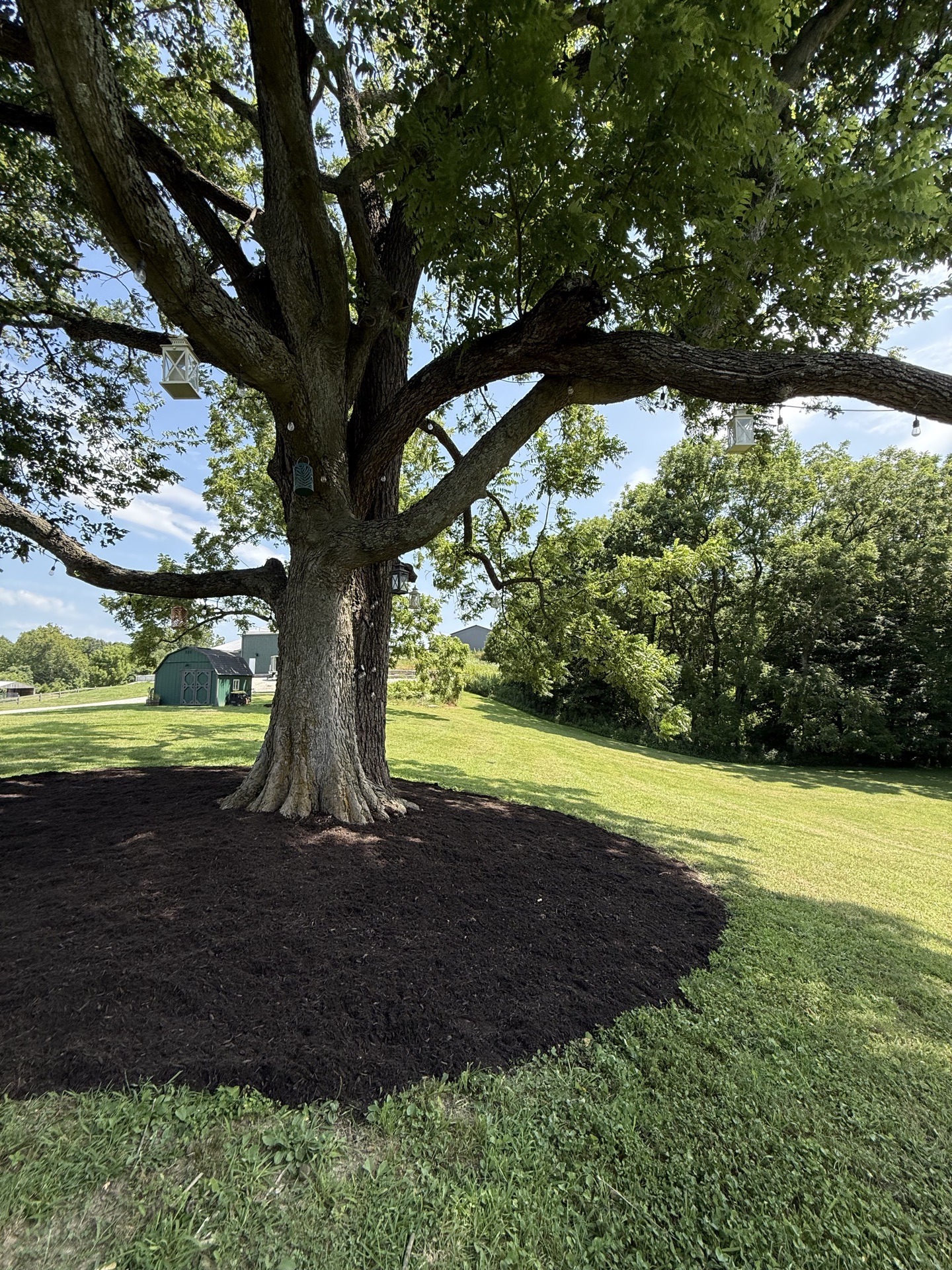
Mulch and water work as a team. A 2 to 4 inch layer of organic mulch over the root zone slows evaporation, evens out soil temperature swings, and helps hold moisture through freeze-thaw cycles.
- Keep mulch a few inches away from the trunk so the root flare stays visible.
- Spread it wide, ideally out toward the drip line, instead of piling it high.
- Never build a mulch “volcano” against the trunk.
At Bluestone Tree, we make organic mulch from local tree material, and it is a good fit for winter root-zone protection.
Common Fall Watering Mistakes to Avoid
- Assuming fall rain has been enough without checking the soil
- Waiting until the ground has already frozen
- Watering only at the base of the trunk
- Applying water so fast that it runs off
- Watering soil that is already saturated
- Forgetting about evergreens and newly planted trees
- Using overhead sprinklers in cold weather
Signs Your Trees Needed More Water Last Winter
Winter moisture stress often doesn’t show up until spring. Watch for:
- Brown needle tips, or fully browned needles, on pines, spruces, and other conifers (winter burn)
- Brown, curled leaf edges or reddish-purple discoloration on broadleaf evergreens
- Dieback at the tips of branches
- Slow, sparse, or uneven leaf-out
These symptoms can point to winter moisture stress, but they can also come from cold injury, road salt, pests, disease, or root problems. Before assuming the cause, have the tree looked at. It also helps to wait until spring growth shows the full extent of the damage before pruning affected branches. For more on what to look for, see our guide to signs of a dying tree.
When to Call a Bloomington Arborist
Most homeowners can handle fall watering with a hose, a soaker line, or a few watering bags. It makes sense to bring in an arborist when:
- You have many large or high-value trees to look after
- Slopes, access, or soil conditions make thorough watering difficult
- Trees are already showing stress, thinning, or dieback
- You want watering advice as part of a bigger look at tree health, pruning, and mulching
Our plant health care services are built for exactly this kind of year-round support, from soil and moisture issues to pests and disease.
Give Your Trees a Better Start on Spring
Watering trees before winter takes little more than a hose, a quick soil check, and attention to the forecast. Start with your newest trees and your evergreens, water deeply and slowly when the soil is dry, stop once the ground freezes, and add a layer of mulch to hold that moisture in.
Not sure what your trees need this season? Call Bluestone Tree at 812.824.3335 or request an estimate, and our team can help you build a plan for the trees on your property.
Sources: Purdue Extension, Water Now to Minimize Winter Injury; Purdue Extension, Winterize Your Trees (FNR-484-W); Purdue Landscape Report, Autumn Tree Care.