
Dying tree signs Bloomington homeowners can spot, including trunk decay and canopy dieback

12 Dying Tree Signs Bloomington Homeowners Shouldn’t Ignore

A tree can look completely healthy from your driveway and still be failing at its core. That is what makes the dying tree signs Bloomington homeowners should know so important — most internal decline happens quietly, months or years before anything obvious shows up in the canopy. By the time the damage is visible from the street, your options have usually narrowed from treatment to removal.

Bloomington and the surrounding Monroe County area are defined by mature oaks, maples, and ash. Those trees shade our neighborhoods and shape our yards. They also carry real weight over roofs, driveways, and play areas — which is why knowing what internal decline looks like matters more here than in a subdivision full of ten-year-old ornamentals.

Why Trees Die From the Inside Out

Trees move water and nutrients through a thin layer of living tissue just under the bark. The wood at the center is structural, not living. That means a tree can keep leafing out each spring while internal decay, root rot, or a vascular disease steadily hollows out the structure holding it up.

Several things drive this in South Central Indiana:

  • Internal decay and root rot — often triggered by old wounds, poor drainage, or wet summers
  • Vascular diseases — which block water movement without immediately killing the tree
  • Wood-boring pests — including emerald ash borer, which feeds beneath the bark and girdles the tree from within
  • Root damage from construction or grading — the effects of which can take several seasons to surface

Emerald ash borer is a particular concern locally. The Indiana DNR Division of Entomology & Plant Pathology confirmed EAB in Indiana in 2004, and it has since been detected in all 92 counties. If you have an untreated ash tree on your property, internal decline is not a hypothetical risk.

Why Internal Decline Is So Risky in Monroe County

Internal damage is deceptive. A tree may leaf out normally in spring while its trunk or root system is structurally compromised. When high winds or heavy summer thunderstorms move through Monroe County, those weakened trees become the ones that fail.

Left unaddressed, internal decline can lead to:

  • Emergency removals instead of planned, scheduled maintenance
  • Damage to roofs, vehicles, fences, or a neighbor’s property
  • Liability exposure if a known hazard tree causes damage
  • Loss of a mature shade tree that could have been saved with earlier intervention

The pattern we see most often is simple: by the time exterior symptoms are unmistakable, treatment options have already narrowed and removal becomes the only safe recommendation.

12 Dying Tree Signs Bloomington Homeowners Should Watch For

Walk your property a few times a year — late summer and fall are ideal, since stress symptoms are most visible then. Here is what to look for, grouped by where on the tree you will find it.

Signs at the Base and Root Zone

  1. Mushrooms or fungal growth at the base. Shelf-like conks or clusters of mushrooms near the trunk or root flare often signal internal rot. These are common after wet Bloomington summers.
  2. Carpenter ants or wood-boring insect activity. Increased insect presence, or sawdust-like frass around the base, usually means the wood is already soft enough to be worth colonizing.
  3. Leaning or new soil heaving. A tree that has recently started leaning, or shows raised or cracked soil on one side of the root zone, may have lost internal anchorage to root rot.

Signs on the Trunk and Bark

  1. Cracks or splits in the trunk. Vertical cracks or open seams can indicate internal decay or structural stress. Large cracks are especially concerning on trees positioned near a house, garage, or driveway.
  2. Soft or hollow-sounding wood. Tap the trunk with a mallet or the handle of a screwdriver. A hollow or spongy sound can indicate internal decay. If you suspect internal decay, have the tree evaluated by an ISA Certified Arborist rather than guessing at the extent of it.
  3. Discolored or bleeding bark. Dark streaks, oozing sap, or unusual bark discoloration can reveal internal infections or vascular disease.
  4. Water sprouts or epicormic shoots. Clusters of small new branches growing straight out of the trunk or major limbs are a stress response — the tree is attempting to produce foliage because its normal canopy is failing.

Signs in the Canopy

  1. Dieback in the upper canopy. Dead branches starting at the top and progressing downward is a classic sign of systemic internal stress, and it is frequently how emerald ash borer damage first appears in ash trees.
  2. Thinning or patchy canopy. Sparse foliage, or sections where leaves are noticeably smaller than the rest of the tree, often means the tree is struggling to move water and nutrients internally.
  3. Sudden or excessive leaf drop. Premature leaf loss, or leaves that wilt and brown while other trees on the property stay healthy, can point to vascular issues or root problems.
  4. Reduced growth or smaller leaves. Compare this year’s growth and leaf size to previous seasons. Stunted growth on an established tree is a strong internal warning sign.

Site History Worth Noting

  1. Past storm damage or construction impact. Trees that suffered root damage from nearby building, grading, trenching, or previous storms often decline internally over several seasons before showing it above ground.

What to Do If You Spot These Dying Tree Signs

One symptom on its own is not a verdict. Mushrooms after a wet week may mean very little. Mushrooms plus upper-canopy dieback plus a new lean is a different conversation entirely.

Here is a reasonable order of operations:

  1. Document what you are seeing. Photos from several angles, plus notes on when you first noticed it, give an arborist far more to work with.
  2. Note what is beneath the tree. A declining tree over open lawn is a different risk profile than the same tree over a bedroom.
  3. Schedule an evaluation with an ISA Certified Arborist. The International Society of Arboriculture maintains homeowner resources on tree health and on what certification actually means.
  4. Ask whether a formal Tree Risk Assessment is appropriate. If the tree may pose a hazard to a structure or a walkway, this is the right question to raise.

Depending on what the assessment turns up, the path forward may be corrective pruning, targeted plant health care treatment, monitoring on a set schedule, or removal.

When Removal Is the Safer Call

Not every declining tree can be saved, and there is no benefit to delaying an inevitable removal until it happens on its own terms during a storm. Removal generally becomes the recommendation when significant structural wood has been lost to decay, when root anchorage is compromised, or when the tree is positioned so that failure would put a structure or people at risk.

Planned tree removal is nearly always less disruptive and less expensive than emergency tree service after a failure — and it lets you decide the timing, the access route, and what happens to the wood and stump grinding afterward.

Get a Local Assessment Before It Becomes an Emergency

Trees in Bloomington face a specific mix of conditions — our soils, our storm patterns, and pest pressure like emerald ash borer. Bluestone Tree works throughout Bloomington, Ellettsville, Bedford, Martinsville, Monroe County, and South Central Indiana, and we would rather look at a questionable tree early than clear one off your roof later.

If something on this list describes a tree in your yard, call 812-824-3335 or request an estimate to schedule an on-site evaluation.

This guide is for educational purposes. An on-site professional evaluation is essential for accurate diagnosis and recommendations.
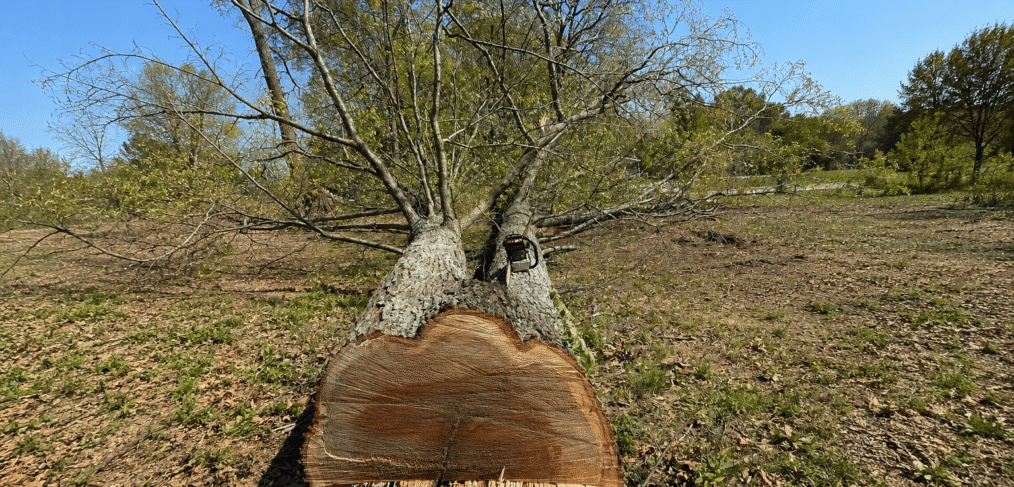
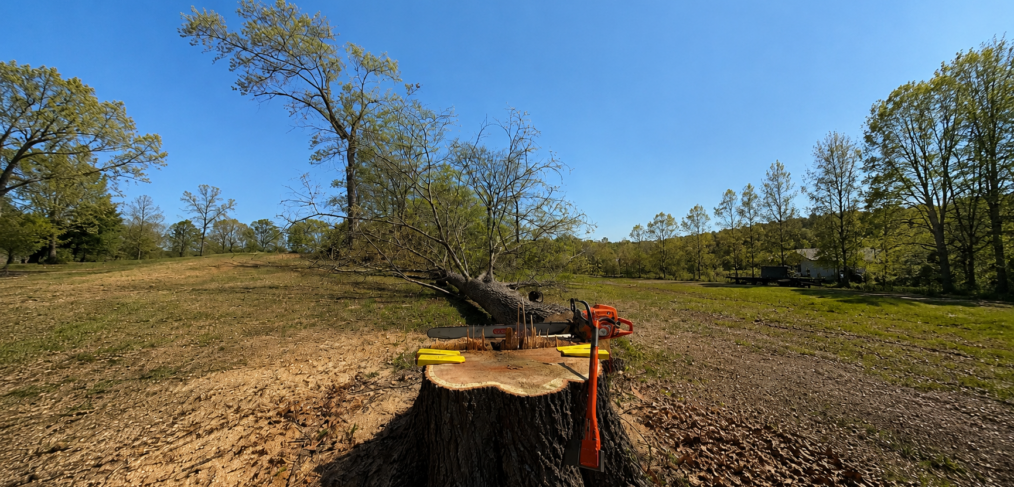
Leaning hardwood tree showing signs it may need removal in Bloomington, IN

Tree Removal Bloomington IN: 7 Warning Signs to Watch For

7 Signs a Tree Needs to Be Removed This Summer and Fall in Bloomington, IN

If you’re researching tree removal Bloomington IN options this summer or fall, you’re probably standing in your yard sizing up a tree that doesn’t look right anymore. Trees are one of the best features of a Bloomington-area property — in neighborhoods like Elm Heights, Renwick, Hyde Park, Hoosier Acres, and Green Acres, and across the wooded lots of Monroe County, Ellettsville, Spencer, Bedford, and Martinsville, mature hardwoods add shade, privacy, and real value to a home. But summer heat and storms — and fall’s leaf drop — tend to expose problems that were easy to miss the rest of the year. Here’s what to look for before deciding.

This guide walks through the most common warning signs that a tree has become a safety risk, with notes on how summer and fall conditions in South Central Indiana make those signs easier — or harder — to spot.

Why Summer and Fall Are the Seasons to Pay Attention

Summer brings heat, humidity, thunderstorms, and high winds — all of which can turn a weakened tree from “watch it” to “hazard” quickly. Fall strips the leaves away and reveals structural problems that were hidden all summer, while also bringing damp conditions that encourage fungal growth. Both seasons matter for another reason: Emerald Ash Borer (EAB) remains active across Indiana, and ash trees weakened by EAB can become brittle and unpredictable within just a few years of infestation.

On larger wooded or rural properties in the region, terrain, soil type, and exposure add extra variables. A visual check from the ground is a good start, but a proper risk evaluation from a trained professional is the most reliable way to know what you’re dealing with.

7 Signs a Tree May Need Removal

1. A New or Worsening Lean
A tree that has developed a noticeable lean — especially toward your house, garage, or power lines — is one of the clearest red flags. Summer storms and saturated fall soils can both accelerate an existing lean. Look closely for cracks or splits in the trunk or major limbs, which often indicate the structure has already started to fail.

2. Extensive Dead or Dying Branches
Large dead limbs in the canopy (sometimes called “widow-makers”) are a serious hazard on their own. In summer, watch for branches that never fully leafed out or canopy sections that look sparse. In fall, dead leaves that cling to branches long after the rest have dropped are a sign of decline — this is especially common in ash trees affected by EAB.

3. Signs of Disease or Pest Infestation

  • Emerald Ash Borer: According to the Indiana DNR Division of Forestry, small D-shaped exit holes, S-shaped tunneling under loose bark, increased woodpecker activity, and canopy thinning that starts at the top.
  • Fungal growth: mushrooms or shelf-like conks growing at the base or on the trunk, which usually point to internal decay. These often show up more in damp summer stretches or after fall rain.
  • Discolored or wilting foliage: premature leaf drop or a patchy, uneven canopy during peak growing season can signal root or vascular problems.

4. Root Damage or Poor Anchorage
Exposed or decaying roots, soil heaving near the base, or mushrooms in the root zone all suggest the tree isn’t well anchored. Nearby construction or soil compaction — common in growing parts of the Bloomington area — can contribute to this over time. Fall’s leaf drop tends to make root-zone issues easier to see.

5. Storm Damage
After any significant summer storm, it’s worth walking your property to check for broken limbs, torn bark, or cracks that run deep into the wood. A tree can look fine right after a storm and still have hidden internal damage that shows up as a failure months later.

6. Poor Location or Overcrowding
Trees planted too close to a house, with roots pressing on a foundation, or growing into power lines can become a long-term liability — even if they’re otherwise healthy. This is a common issue in Bloomington’s older, more established neighborhoods.

7. Significant Overall Decline
When more than half of a tree’s canopy shows deadwood, dieback, or decay, removal is usually the safer and more practical option compared to ongoing treatment.

Summer Watch-Outs (June–August)

Heat and humidity put extra stress on trees that are already weakened by pests or prior damage, and thunderstorms have a way of revealing structural weaknesses fast. EAB adult activity also peaks in summer, which is when D-shaped exit holes are easiest to spot. It’s worth walking your property after any heavy storm to check for new leans or fallen debris.

Late summer often brings drought stress on top of it — trees don’t handle sharp swings between wet and dry conditions well, so consistent, appropriate watering during dry stretches can go a long way toward reducing stress-related decline.

Fall Watch-Outs (September–November)

Once leaves drop, structural issues and dead branches become much easier to see. Fungal fruiting bodies also tend to show up more in fall’s damp conditions. This makes fall a good window for a professional evaluation before winter storms arrive, since dormant-season pruning or removal typically has the least impact on the surrounding landscape. It’s also a good time to plan replanting with native species suited to the area.

When Pruning or Treatment Might Be Enough

Not every issue calls for full removal. Minor deadwood, early-stage pest problems, or small structural defects can often be addressed with pruning, cabling, or targeted treatment instead. A qualified arborist, following ISA tree risk assessment guidelines, should be able to walk you through the options honestly — removal is typically recommended only when the risk clearly outweighs the value of trying to save the tree.

What a Professional Tree Assessment Looks Like

Tree removal Bloomington IN homeowners can rely on should always start with an on-site visit from a trained arborist, who checks the tree against established risk-assessment standards rather than relying on a quick visual guess. A good assessment should leave you with a clear picture of the tree’s condition and a straightforward set of options — pruning, removal, or continued monitoring — so you can make an informed decision for your property.

Frequently Asked Questions

How can I tell if my ash tree has Emerald Ash Borer?
Look for small D-shaped exit holes, canopy thinning that starts at the top, bark splitting, and increased woodpecker activity. Symptoms can look similar to other types of stress, so professional confirmation is the best way to know for sure.

Is it safe to wait until fall to remove a tree showing signs in summer?
It depends on severity. Minor issues can often wait. But a tree that’s leaning, cracked, or heavily damaged near a structure should be addressed promptly rather than waiting out the season.

Will my homeowners insurance cover tree removal?
This varies by policy and situation, so it’s worth checking directly with your insurer. Coverage is more common for trees that fall on a structure during a storm, and less common for preventive removal. Photos and a written assessment from a professional can help support a claim either way.

Do I need a permit to remove a tree in Bloomington?
Permit rules for tree removal Bloomington IN properties can vary depending on your location — for example, some historic districts have additional guidelines. Check with the City of Bloomington or Monroe County directly for current rules before removing a tree.

What should I do after removal?
Stump grinding and replanting with a native, well-suited species are the two most common next steps. Local resources like the Monroe County Soil & Water Conservation District can help with species selection.

How often should trees be assessed?
An annual check is a reasonable baseline for mature trees, with an additional look after any major storm or during high-risk seasons like summer and fall.

Bluestone Tree crew providing Bloomington tree service for a residential property

Professional residential tree care and tree service in Bloomington and South Central Indiana.

Tree Removal Bloomington IN: Protect Your Property This Season

Catching these signs early — during summer or fall, before winter storms arrive — can prevent costly emergencies and help preserve the trees that make this region’s neighborhoods worth living in. If you’re seeing any of the warning signs above, it’s worth having a professional take a look before deciding what to do next.

Bluestone Tree provides tree risk assessments and removal services throughout Bloomington, Ellettsville, Bedford, Martinsville, and the surrounding South Central Indiana area. Call 812-824-3335 or visit bluestonetree.com to schedule an evaluation.

Every property is different — the guidance above is general in nature. A site-specific evaluation from a qualified arborist is the most reliable way to assess your tree’s condition.