
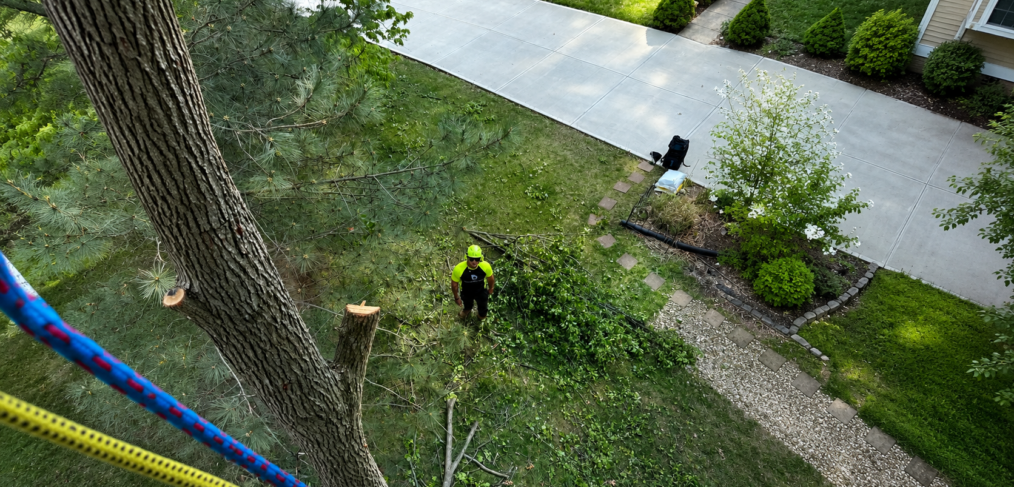
Arborist safely removing a large tree at a Bloomington IN home

Tree Removal Cost in Bloomington: A 2026 Homeowner’s Price Guide

Tree Removal Cost in Bloomington: A 2026 Homeowner’s Price Guide

When a storm rolls through Monroe County or a mature tree starts dropping limbs over the driveway, one of the first questions Bloomington homeowners ask is what it will cost to take it down safely. Knowing the typical tree removal cost Bloomington homeowners pay in 2026 helps you budget ahead, spot a fair quote, and avoid both overpaying and cutting dangerous corners.

Whether you’re in an established neighborhood like Renwick, Elm Heights, Hyde Park, or Green Acres, or further out toward Ellettsville, Bedford, or Monroe Lake, mature trees define the local landscape. They add shade, privacy, and real property value — but once they become diseased, storm-damaged, or structurally risky, professional removal becomes the safe choice. This guide breaks down realistic 2026 price ranges, the factors that move the number, when pruning beats removal, and what to expect from a reputable local crew.

Why Tree Removal Costs Vary So Much in Bloomington

Unlike a flat-rate service, tree removal pricing is highly customized — and for good reason. No two properties in Bloomington are the same, especially across the wooded, hilly lots common in east and southeast Bloomington and the rural edges of the county.

That’s why ethical providers quote after an on-site look rather than throwing out a phone number sight-unseen. Access, terrain, proximity to the house, tree condition, and cleanup all shift the price. Local demand also plays a role: storm seasons, ongoing Emerald Ash Borer (EAB) damage, and routine maintenance all affect scheduling and availability across Monroe County.

Typical Tree Removal Price Ranges in Bloomington, IN

The ranges below are general regional estimates for context only — not a quote. Your actual price depends on the specifics of your property and requires a site visit.

  • Small trees (under 30 ft): roughly $450–$1,200. Younger ornamentals, volunteer trees, and smaller yard specimens with easy access. Basic removal and initial debris handling are usually included.
  • Medium trees (30–60 ft): roughly $1,200–$2,500. Many residential trees in neighborhoods like Elm Heights or Renwick land here. Nearness to structures or added equipment can push toward the top of the range.
  • Large trees (over 60 ft): commonly $2,500–$5,500+. Mature oaks and maples in Bloomington’s older areas often need a crane or specialized rigging, especially in tight spaces near homes.

Complex or emergency jobs can exceed these ranges. The most reliable number always comes from an on-site evaluation with a clear, itemized quote.

Additional Costs to Budget For

Removal rarely ends at felling the tree. Plan for related work:

  • Stump grinding: about $250–$500+, depending on diameter and access. Grinding stops regrowth and removes a tripping hazard so you can replant or landscape.
  • Debris removal and hauling: often bundled into a professional quote. Many crews recycle material into mulch or wood chips rather than sending it to a landfill.
  • Crane or specialized equipment: can add $500–$2,000+ for large or hard-to-reach trees common on Bloomington’s sloped lots.
  • Emergency or post-storm work: may carry a premium due to urgency and safety demands, though honest providers keep pricing fair even after major weather events.
  • Permits and compliance: most private-property removals proceed straightforwardly, but city right-of-way trees (often the strip between the road and sidewalk) and some protected or historic areas may require city approval. Always confirm before work begins.

Ask for an itemized proposal so you understand the full scope.

What Affects Tree Removal Cost Bloomington Homeowners Pay

Several factors determine your specific price:

  1. Size and species — larger, denser, heavier trees take more labor and equipment.
  2. Location and access — trees near homes, power lines, fences, or on slopes raise costs due to rigging and risk.
  3. Tree condition — dead, leaning, or storm-damaged trees over structures are higher-risk and demand extra care to remove without property damage.
  4. Debris volume — more branches and trunk mean more hauling time.
  5. Crew training and equipment — qualified crews using proper safety protocols and modern gear reduce the risk of injury and property damage.
  6. Season and demand — post-storm periods run busy, while dormant-season work sometimes offers better availability.

Tree Removal vs. Pruning: Which Does Your Tree Actually Need?

Not every problem tree needs to come down. In many cases, an early consultation with a certified arborist catches issues while they’re still treatable — meaning targeted pruning or plant health care can extend a tree’s life and keep it safe at a lower cost than full removal.

Professional pruning scope varies widely, so it’s worth an assessment before assuming the worst. A trustworthy company will recommend removal only when safety or tree health genuinely requires it.

Signs a Tree May Need Removal

  • Extensive decay or large dead branches over structures
  • A significant lean toward your home
  • Severe EAB or pest damage
  • Roots threatening a foundation or driveway
  • Repeated dropping of dead limbs or thinning canopy
  • Mushrooms or fungi growing at the base or over the roots
  • Consistent dieback in the upper canopy

If you’re seeing several of these, it’s worth having a professional take a look sooner rather than later.

Why Professional Removal Is Worth It

A clean, professional removal protects your property value, reduces liability and insurance risk, and keeps your family safer than a DIY attempt on a large or compromised tree. It also opens space for smarter replanting suited to your yard — and in Bloomington’s established neighborhoods, a tidy job preserves curb appeal and neighborhood character.

What the Professional Process Looks Like

A quality provider follows a clear, structured approach:

  1. Contact and scheduling — a prompt response, especially for potential hazards.
  2. On-site assessment — a qualified arborist evaluates the tree, the risks, and your options.
  3. Detailed quote — a transparent breakdown with no hidden fees.
  4. Execution — safe, efficient work with minimal disruption and full cleanup.
  5. Follow-up — guidance on replanting, maintenance, or ongoing care.

Bluestone Tree follows this standard with trained, certified staff, responsible recycling of wood material, and a focus on educating homeowners rather than upselling them.

Frequently Asked Questions

How long does tree removal take?
Most residential jobs finish in a few hours to a full day, depending on size and complexity.

Will my insurance cover it?
Sometimes — storm damage or a tree that has fallen on a structure may be covered, and documentation from a professional assessment helps. Coverage varies by policy, so check with your insurer.

Do I need a permit in Bloomington?
Most private-property removals typically don’t require one, but city right-of-way trees and protected or historic areas may. Confirm with the City of Bloomington for your specific situation.

What about the stump?
Many homeowners choose to grind the stump right after removal for a clean, ready-to-landscape yard.

Get a Straight Answer on Your Tree

General ranges are a useful starting point, but the only accurate tree removal cost Bloomington figure for your property comes from a professional on-site evaluation. If you’re worried about a tree in Renwick, Elm Heights, or anywhere in the greater Bloomington and South Central Indiana area, it’s better to act before it becomes an emergency.

Bluestone Tree offers on-site assessments, transparent itemized quotes, and safe, thorough work. Call 812-824-3335 or request a free estimate to get recommendations tailored to your property.
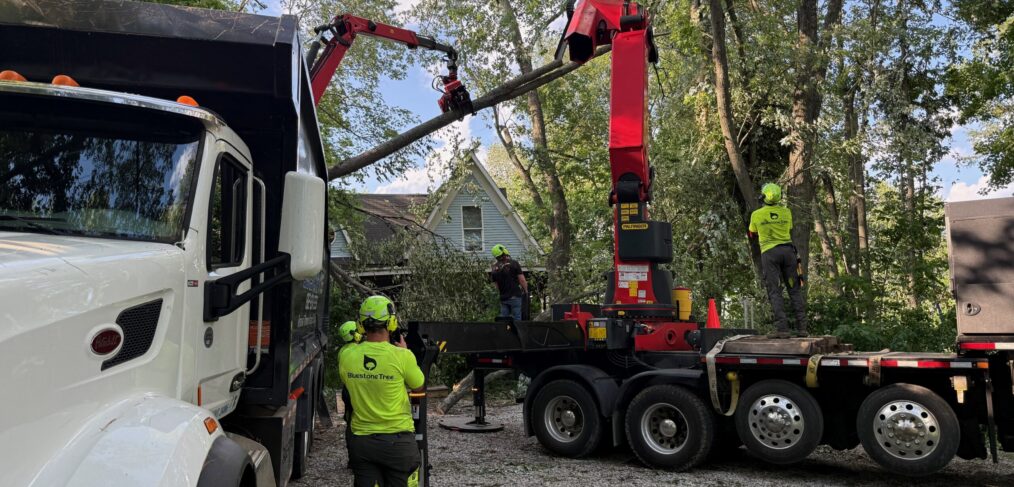
Bluestone Tree crew removing a large tree in a Bloomington Indiana residential yard

What Does Tree Service Actually Cost in Bloomington, Indiana?

If you’ve ever gotten two tree service quotes and wondered why they were hundreds of dollars apart, you’re not alone. Bloomington tree service cost varies more than most homeowners expect — and the gap usually has less to do with profit margins than with what’s actually included in the work.

The short answer: the most expensive parts of professional tree care are often the ones you can’t see. Hazard assessment, rigging systems, insurance, proper equipment, and post-work cleanup can easily account for half the total cost on a large removal. When a lower bid skips those steps, the savings are real — but so is the risk.

This guide breaks down what drives tree service pricing in Bloomington and South Central Indiana, what you should expect to pay in 2026, and what questions to ask before you hire anyone.


Why Tree Service Costs More Than It Looks

Most homeowners assume the biggest cost is the cutting. In reality, the cutting is often the smallest part of the job.

For a large, hazardous tree removal — the kind common in Bloomington neighborhoods after ice storm damage or emerald ash borer decline — a significant portion of the total cost goes toward work that happens before and after the saw comes out:

  • Hazard assessment and planning by a certified arborist
  • Equipment mobilization — getting the right machinery to your property
  • Rigging and safety systems to control how sections fall
  • Site protection — keeping your lawn, driveway, and utilities intact
  • Debris handling, stump work, and cleanup

Skipping or cutting corners on any of these steps doesn’t make the tree easier to remove. It just transfers the risk — to your roof, your neighbor’s fence, or the crew on the ground.


What Drives the Price of Tree Work in South Central Indiana

Tree Size and Complexity

Tree size is the most straightforward pricing factor:

  • Small trees (under 30 feet): Removal typically runs $300–$800
  • Medium trees (30–60 feet): Expect $800–$2,500
  • Large or hazardous trees (over 60 feet): $2,500–$7,500 or more

These ranges reflect general market conditions in the Bloomington area for 2026. Your actual cost depends on everything else on this list.

(Note: All pricing ranges in this article are approximate and based on regional market conditions. Get a site-specific estimate for accurate numbers.)

Tree Health and Condition

Diseased or storm-damaged trees cost more to remove safely. That’s not a pricing trick — it reflects real risk. Brittle wood from emerald ash borer decline or prolonged decay can’t be felled like a healthy tree. Instead, crews work in sections from the top down. Each cut has to account for unpredictable wood failure, so the work is slower and requires more safety infrastructure.

This is one of the reasons tree service costs have trended upward in Monroe County over the past several years. EAB has left a large number of ash trees in various stages of decline, and removing them safely takes more time and skill than a healthy tree of the same size.

Site Access and Property Conditions

This is where pricing can surprise people. If your tree is:

  • Surrounded by fencing, a deck, or other structures
  • Located in a tight urban backyard without equipment access
  • Close to power lines, a septic system, or a drainage field
  • On a slope or near a retaining wall

…then the crew may need smaller, specialized equipment that works more slowly, additional labor to hand-carry debris, or careful coordination with utility providers. These factors can add $500–$2,000 or more to a job that might look simple from the street.

Rural properties in Ellettsville, Bedford, and Martinsville sometimes have the opposite challenge — large-scale access with room for heavy equipment, but longer drive times and mobilization costs.

Urban Lots and HOA or Heritage Tree Considerations

Bloomington’s older neighborhoods are full of mature trees close to homes, utilities, and property lines. That proximity increases the precision required and often adds time to a job. Some properties also fall under HOA guidelines or city ordinances that require permits or restrict removal methods. Factor in administrative time if your property has those requirements.


Equipment, Insurance, and the Costs You Don’t See

One of the least visible but most significant cost drivers in tree service is the overhead that reputable companies carry — and that less established ones often don’t.

Crane and aerial lift rental for trees near structures can run $1,000–$3,000 or more per day. Not every job needs one, but when it does, there’s no substitute.

Insurance — both liability and workers’ compensation — is non-negotiable for any crew working near your home. It’s also a direct cost that shows up in your quote. A company without it can offer a lower price, but if something goes wrong, the exposure falls on you.

Certified arborist involvement adds cost at the assessment and planning stage, but it also prevents the kind of mistakes that turn a $2,000 tree removal into a $10,000 insurance claim. In Indiana’s climate — with frequent high winds, heavy ice loading, and clay soils that affect root stability — that expertise is worth what it costs.

ISA Certified Arborists complete rigorous training and ongoing education through the International Society of Arboriculture — the recognized standard for professional tree care.


Bloomington Tree Service Cost: What to Expect in 2026

Here’s a realistic range for common residential tree projects in South Central Indiana:

Service Approximate Range
Basic trimming / crown cleaning $200–$600
Small tree removal (under 30 ft) $300–$800
Medium tree removal (30–60 ft) $800–$2,500
Large tree removal (over 60 ft) $2,500–$7,500+
Stump grinding $100–$400 per stump
Emergency / after-hours response Add 25–50% or more
Multi-tree project with crane $3,000–$10,000+

These are general Bloomington-area estimates for 2026 and will vary based on the specific conditions of your property. A detailed on-site estimate is the only reliable number.


Aftercare and Ongoing Tree Health — Is a Maintenance Plan Worth It?

Once the immediate work is done, the trees that remain still need attention. Annual maintenance — structural pruning, plant health care, disease monitoring — costs far less than emergency removal.

Ongoing tree care plans in the Bloomington area generally start around $300–$1,500 per year. The range depends on your property size and how many trees are involved. For homeowners with several mature trees, or properties in areas with active pest pressure like emerald ash borer or oak wilt, proactive care is usually the more cost-effective path over five to ten years.

Debris handling choices also matter. Some providers offer wood recycling, mulch production, or on-site chipping that reduces hauling costs and can leave you with usable organic mulch — worth asking about when comparing bids.

Questions to Ask Before You Hire a Tree Service

Before signing a contract or accepting the lowest bid, ask any tree service company the following:

  1. Are you licensed and insured in Indiana? Ask for proof of liability coverage and workers’ comp.
  2. Do you have ISA Certified Arborists on staff? Certification matters for complex jobs, disease diagnosis, and risk assessment.
  3. What does cleanup include? Confirm whether stump grinding, chip hauling, and site restoration are part of the quote.
  4. How do you handle trees near utilities or structures? The answer tells you a lot about experience level.
  5. What happens if something goes wrong? A reputable company will have a clear answer.

The cheapest bid rarely includes all of the above. That’s not automatically a problem, but it’s worth understanding exactly what’s been left out.


Ready to Get a Real Estimate?

If you have a tree on your property that needs attention — whether it’s showing signs of disease, was damaged in a storm, or has simply grown too large for its space — the best first step is a site visit from a certified arborist.

At Bluestone Tree, we serve homeowners across Bloomington, Monroe County, Ellettsville, Bedford, Martinsville, and the surrounding South Central Indiana area. We’re happy to walk your property, assess what’s going on, and give you a clear estimate with no pressure.

Call us at 812.824.3335 or visit bluestonetree.com to schedule a free estimate.


Frequently Asked Questions

What is the most expensive part of tree removal in Bloomington?
In most cases, hazard assessment, rigging, and site access challenges represent the largest share of the total cost — often more than the actual cutting work.

How much does tree removal typically cost in South Central Indiana?
For most homeowners, residential removals fall between $800 and $3,000. Large, hazardous trees — especially those with limited access or near structures — can reach $4,000–$7,500 or more.

Is annual tree maintenance worth the cost?
For most properties with mature trees, yes. Preventive pruning and plant health care cost significantly less than emergency removal and typically extend the life of your trees considerably.

How can I keep tree service costs reasonable without cutting safety corners?
Schedule work during off-peak seasons when possible, address issues early before they become emergencies, and choose a provider with efficient processes and transparent pricing rather than simply the lowest initial quote.


Pricing estimates in this article reflect general market conditions in the Bloomington, Indiana area as of mid-2026. Actual costs vary by property, access, tree condition, and scope of work. Always request an on-site estimate for accurate figures.