Healthy trees are an important investment in your property. They provide shade, beauty, privacy, stormwater benefits, wildlife habitat, and long-term property value. However, trees throughout Indiana are increasingly under stress from invasive insects, diseases, drought, construction damage, and changing environmental conditions.
One of the most destructive tree pests in recent history is the Emerald Ash Borer, commonly referred to as EAB.
While Emerald Ash Borer remains a major concern, it also highlights the importance of proactive tree pest management in general. Many tree problems can be identified and treated early before significant decline or hazardous conditions develop.
The Importance of Tree Pest Management
Tree pest management is similar to preventative healthcare for people. Trees often begin showing subtle symptoms long before major decline becomes obvious.
Professional monitoring and assessment can help identify:
- Insect infestations
- Fungal diseases
- Root stress
- Nutrient deficiencies
- Drought stress
- Structural problems
- Environmental decline
Early intervention often leads to:
- Lower long-term costs
- Increased tree longevity
- Reduced safety risks
- Improved tree appearance and vigor
- Avoidance of large removals
Many homeowners wait until a tree is severely declining before seeking help, but by that point treatment options may be limited.
What Is Emerald Ash Borer?
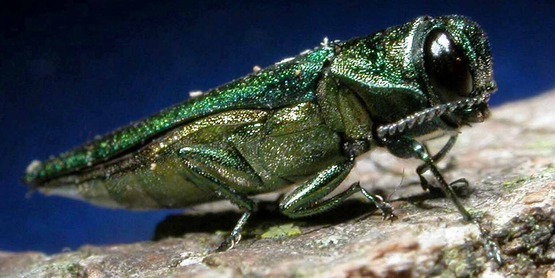
Emerald Ash Borer is a small metallic green beetle native to Asia that was first discovered in the United States in Michigan in 2002.
Since then, it has spread aggressively throughout Indiana and much of North America, killing millions of ash trees.
The adult beetles themselves cause little damage. The real destruction occurs beneath the bark, where larvae tunnel through the tree’s vascular system and disrupt the movement of water and nutrients.
Without treatment, most infested ash trees eventually decline and die.
How to Identify an Ash Tree
Ash trees have several key characteristics:
- Opposite branch arrangement
- Compound leaves with multiple leaflets
- Diamond-pattern bark on mature trees
- Straight trunk form with rounded canopy shape
Common ash species found in Indiana include:
- White Ash
- Green Ash
- Black Ash
Many homeowners are unaware they even have ash trees until signs of Emerald Ash Borer begin appearing.
Signs of Emerald Ash Borer Infestation
Emerald Ash Borer damage is often well underway before symptoms become obvious.
Common warning signs include:
Canopy Thinning
Leaves become sparse, especially in the upper crown.
Dead Upper Branches
Dieback typically begins near the top of the tree.
Bark Splitting
Vertical cracks can appear as larvae tunnel underneath the bark.
Woodpecker Activity
Woodpeckers frequently feed on EAB larvae and may remove bark while searching for insects.
D-Shaped Exit Holes
Adult beetles leave small D-shaped holes when emerging from the tree.
Sprouting Along the Trunk
Stressed trees may produce abnormal shoots from the trunk or root flare.
Why Professional Assessment Matters
Not all declining ash trees are automatically beyond saving. Likewise, not every ash tree is a good candidate for treatment.
A certified arborist can evaluate:
- Tree species confirmation
- Presence of Emerald Ash Borer
- Degree of infestation
- Structural condition
- Tree health and vigor
- Likelihood of successful treatment
- Risk to nearby targets or structures
Timing is critical. Trees treated early generally have much higher success rates than trees already experiencing severe canopy loss.
Emerald Ash Borer Treatment
One of the most effective management tools for Emerald Ash Borer is professional trunk injection treatment.
At Bluestone Tree, trunk injections:
- Deliver treatment directly into the tree’s vascular system
- Target Emerald Ash Borer larvae internally
- Reduce off-target environmental exposure
- Provide approximately two years of efficacy
- Help preserve healthy or moderately affected ash trees
Treatment intervals and recommendations may vary depending on the condition and size of the tree.
Pest Management Beyond Emerald Ash Borer
While EAB receives significant attention, Indiana trees face many additional threats including:
- Bagworms
- Scale insects
- Borers
- Needle cast diseases
- Root decline
- Drought stress
- Soil compaction
- Construction damage
A proactive plant health care program can help identify and manage these issues before they become severe.
Routine monitoring allows arborists to track changes in tree health over time and recommend targeted treatments when needed.
Treat or Remove?
Whether an ash tree should be treated or removed depends on several factors:
- Tree condition
- Structural integrity
- Location
- Size
- Landscape value
- Cost comparison
- Risk level
Many mature ash trees are valuable enough to justify long-term preservation through treatment, especially when caught early.
Schedule an Arborist Assessment
If you have ash trees on your property — or simply want to better understand the health of your trees — Bluestone Tree can help.
Our team can assess tree health, identify pest or disease concerns, and recommend appropriate treatment or management options for your landscape.
Contact Bluestone Tree to schedule a professional arborist assessment and learn more about tree pest management and Emerald Ash Borer treatment options in south central Indiana.