Most people assume trees decline because of insects, disease, or weather.
While those factors can play a role, they’re often not the root cause.
In urban and suburban environments, the real issue usually starts below ground — in the soil.
At Bluestone Tree, we regularly diagnose tree problems that trace back to poor soil conditions and root health issues. If the soil isn’t functioning properly, the tree can’t either.
The Difference Between Forest Soil and Yard Soil
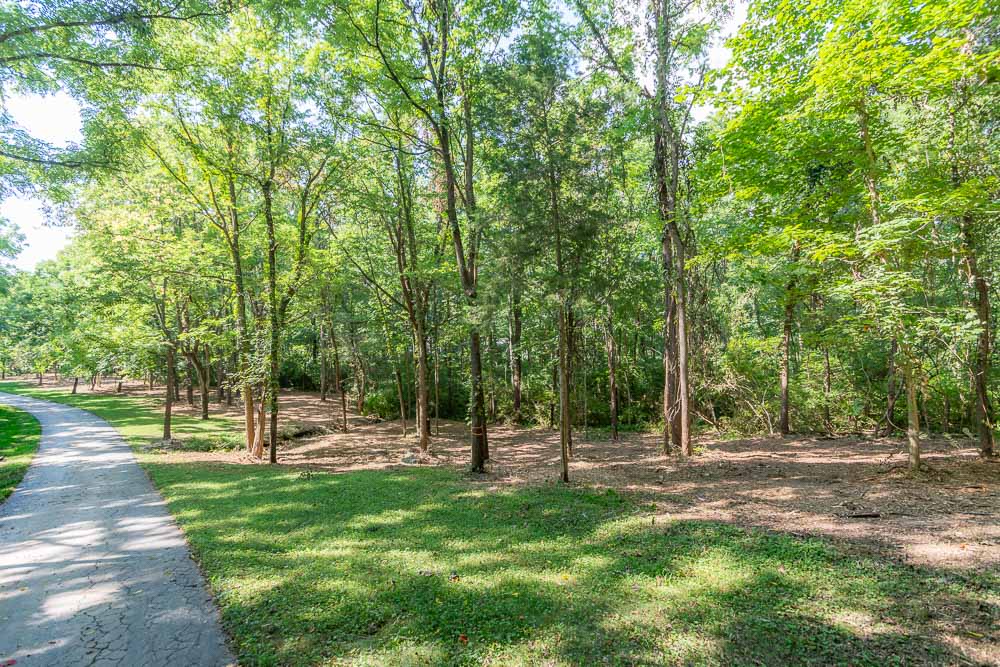
In a natural forest, soil is:
Loose and well-structured
Rich in organic matter
Full of beneficial microbial life
Constantly replenished with natural nutrients
Tree roots can spread freely, access oxygen, and efficiently absorb water and nutrients.
Now compare that to a typical yard or developed property.
Urban soils are often:
Compacted from construction and foot traffic
Stripped of topsoil during grading
Low in organic matter
Covered with turf that competes for resources
From a tree’s perspective, it’s a completely different — and much more difficult — environment.
Common Soil Problems That Affect Tree Health
Soil Compaction
Heavy equipment, vehicles, and even regular foot traffic compress the soil over time.
This reduces pore space, limiting:
Oxygen availability
Water infiltration
Root expansion
Without oxygen, roots struggle to function — and in severe cases, begin to decline.
Poor Drainage or Saturated Soil
In many Indiana landscapes, especially clay-heavy soils, water doesn’t move easily.
This can lead to:
Waterlogged root zones
Increased risk of root rot
Reduced oxygen in the soil
Tree roots need both water and air. Too much of one can cause serious stress.
Lack of Organic Matter
Healthy soil depends on organic material to support structure and biology.
In urban environments, that layer is often missing.
Without it:
Microbial activity declines
Nutrient cycling slows
Soil becomes dense and lifeless
Restricted Root Growth
Construction, driveways, sidewalks, and compacted turf limit where roots can grow.
Instead of spreading naturally, roots become confined — reducing stability and access to nutrients.
Signs Your Trees May Be Struggling
When soil conditions are poor, trees operate under constant stress.
You may notice:
Thinning canopy
Smaller or discolored leaves
Branch dieback
Slower growth year over year
Over time, this stress weakens the tree’s natural defenses, making it more susceptible to tree diseases, pests, and environmental damage.
Why Treating Symptoms Isn’t Enough
It’s common to focus on visible problems like:
Leaf spots
Dead branches
Insect activity
But these are often symptoms — not the root cause.
Treating surface-level issues without addressing soil health is like taking medicine without fixing the underlying condition. The tree may improve temporarily, but the decline cycle continues.
A Better Approach: Tree Health Starts with the Soil
At Bluestone Tree, our Tree Health Care program focuses on restoring the environment where trees actually live — the root zone.
Our process may include:
Soil testing and analysis to identify nutrient deficiencies
Root zone improvement and soil decompaction (air spading)
Organic soil amendments, biochar, and compost to rebuild soil biology
Proper mulch installation to retain moisture and improve soil structure
This is not a one-size-fits-all solution — it’s a customized approach based on your property and tree conditions.
Healthy Soil = Happy, Healthy Trees
When soil conditions improve, trees respond.
You can expect:
Stronger root systems
Better nutrient uptake
Increased resistance to pests and disease
Improved drought tolerance
Fuller canopy and healthier leaf color
Instead of reacting to problems, you’re creating conditions where trees can thrive.
Our Approach at Bluestone Tree
We don’t just treat what’s happening above ground.
We diagnose the entire system — starting below ground — to address the real cause of tree decline.
Because at the end of the day:
Healthy trees don’t start in the canopy — they start in the soil.
Schedule Your Tree Health Assessment
If your trees are showing signs of stress or decline, the issue may be deeper than it appears.
📞 Call today to schedule your Tree Health Assessment and get a professional evaluation of your soil and tree health.